





Speck Chrysler Jeep Dodge Ram

Blog / Automotive Service and Repair

Why Is My Car Heater Blowing Cold Air? Common Causes and Fixes

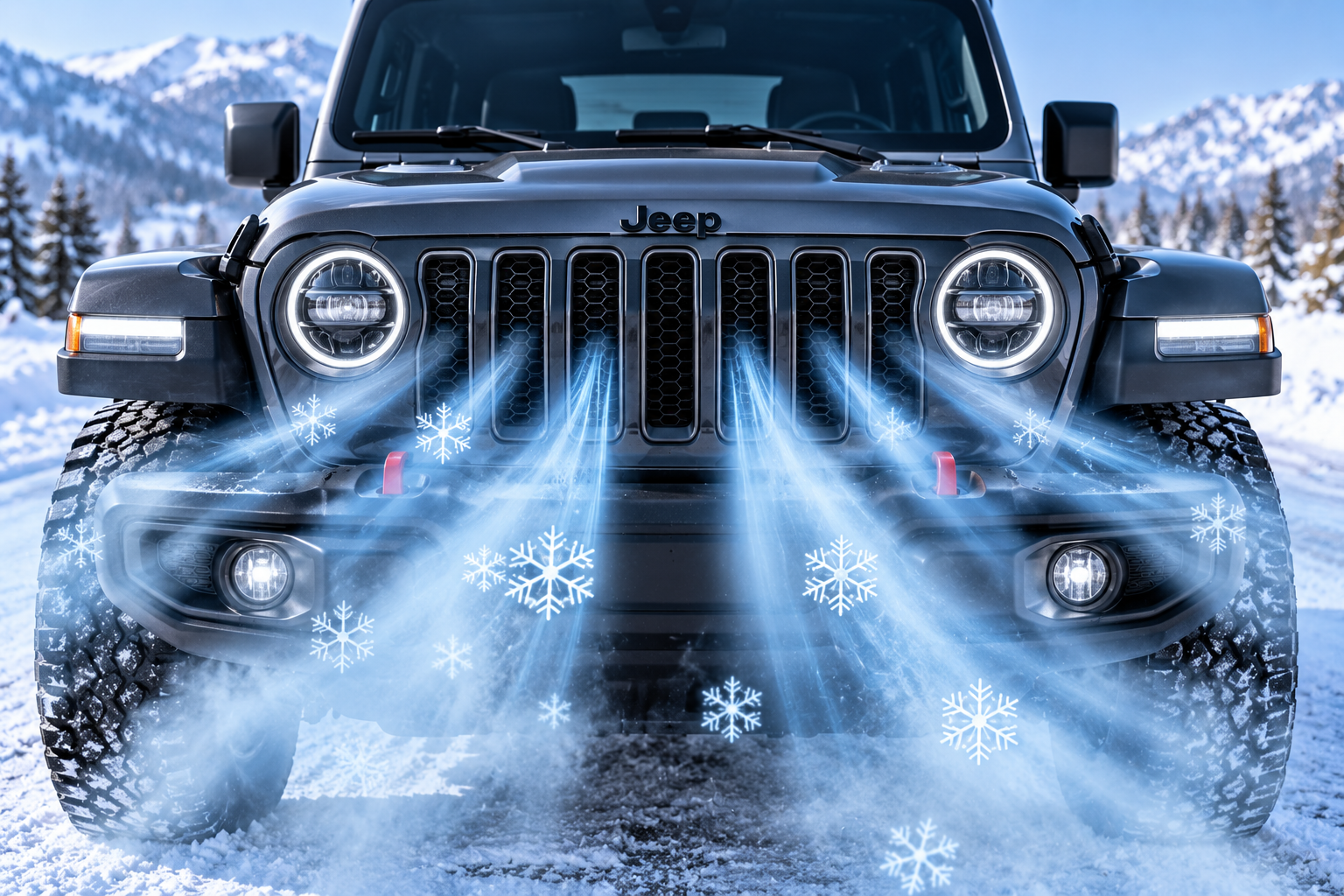
jeep-blowing-cold-air

Few things are more frustrating than turning on your car heater on a cold Yakima Valley morning and getting nothing but cold air in return. A car heater blowing cold air is one of the most common cold weather complaints our service team hears from Sunnyside and Tri-Cities drivers every single winter season. Here is your complete guide to why your car heater is blowing cold air from our team at Speck CDJR in Sunnyside.

Is Your Engine Warmed Up Yet?

Before assuming something is wrong, give your engine adequate time to warm up after a cold start. Your car's heater uses heat from your engine coolant to warm the air blown into your cabin. Most vehicles need three to five minutes of running time before the heater produces genuinely warm air during cold Eastern Washington winter mornings. If your heater still blows cold air after your engine has fully warmed up, one of the following causes is likely responsible.

Common Causes of a Car Heater Blowing Cold Air

Low Coolant Level
Low coolant is the single most common cause of a car heater blowing cold air on any vehicle. When your coolant level drops too low, insufficient coolant reaches the heater core resulting in little to no heat output from your vents. Check your coolant reservoir level when your engine is cold and top it off if the level is below the minimum line. A coolant level that drops repeatedly without visible leaks may indicate an internal leak requiring professional diagnosis at Speck CDJR.

Thermostat Stuck Open
A thermostat stuck in the open position allows coolant to flow freely before it has time to heat up properly. That constantly circulating cool coolant never reaches a high enough temperature to produce adequate heat through your heater core. A stuck-open thermostat is one of the most reliable causes of a heater that blows only mildly warm or completely cold air regardless of how long the engine runs.

Clogged or Failing Heater Core
The heater core is a small radiator-like component behind your dashboard that transfers heat from your engine coolant to your cabin air. A clogged heater core restricts coolant flow reducing or completely eliminating heat output from your vents. Symptoms include cold air from the vents, a sweet smell inside the cabin, foggy windows, and unexplained coolant loss.

Faulty Blend Door Actuator
The blend door actuator is a small electric motor that controls the ratio of hot and cold air mixed before it reaches your vents. A failed blend door actuator can leave the blend door stuck in the cold air position regardless of your temperature setting. Symptoms include temperature that does not change when you adjust the controls and a clicking noise from behind your dashboard.

Air Pocket in the Cooling System
An air pocket trapped in your cooling system can prevent adequate coolant flow through your heater core. Air pockets typically occur after a coolant leak repair or cooling system service where the system was opened and refilled. Bleeding the air out of your cooling system restores proper coolant circulation and typically resolves the cold air problem quickly.

Failing Water Pump
A water pump that is beginning to fail circulates coolant less effectively reducing flow through your heater core. Symptoms include engine overheating, coolant leaks near the front of the engine, and reduced heater output. A failing water pump requires prompt professional attention as complete failure can cause serious engine damage.

What to Check at Home Before Visiting the Dealership

Check Your Coolant Level
Check your coolant reservoir level when your engine is completely cold. Top off your coolant if the level is below the minimum line using the correct coolant type specified in your owner's manual.

Check Your Temperature Gauge
Monitor your temperature gauge after starting on a cold morning. A temperature gauge that never reaches the normal operating range indicates a thermostat stuck open that needs professional replacement.

Check for a Sweet Smell
A sweet or syrupy smell inside your cabin when the heat is running is a reliable indicator of a heater core leak. Do not ignore a sweet smell from your vents as coolant vapor inside your cabin is a health and safety concern requiring immediate professional attention.

Check Your Heater Controls
Verify your temperature control is set to maximum heat and your fan speed is set to medium or high. On vehicles with automatic climate control verify the temperature is set well above 70 degrees and the system is not in economy or recirculation mode.

When to Schedule Service at Speck CDJR

Schedule a service appointment at Speck CDJR in Sunnyside if you notice any of the following:

  • Heater still blows cold air after the engine is fully warmed up
  • Temperature gauge never reaches the normal operating range during driving
  • Sweet or syrupy smell from your vents when the heater is running
  • Coolant level drops repeatedly without any visible external leaks
  • Clicking or tapping noises from behind the dashboard when adjusting temperature
  • Windows fog excessively and are difficult to clear with the defroster running

What Our Heater Inspection Covers at Speck CDJR

When you bring your vehicle to Speck CDJR for a heater diagnosis our certified technicians perform a complete inspection covering:

  • Coolant level and freeze protection concentration check
  • Thermostat function test to verify correct opening and closing temperature
  • Heater core inspection for leaks, blockages, and restricted coolant flow
  • Blend door actuator test across all temperature settings
  • Water pump inspection for leaks and adequate coolant circulation
  • Cooling system pressure test to identify any internal or external leaks
  • Digital inspection report sent directly to your phone or email

Schedule Your Heater Service at Speck CDJR in Sunnyside

Is your car heater blowing cold air on cold Yakima Valley winter mornings? Our certified service team at Speck CDJR in Sunnyside is ready to diagnose and repair the exact cause of your cold air problem quickly and accurately. Here is how to schedule your heater service appointment today:

  • Online: Visit our website and click "Schedule Service"
  • By Phone: Call our service department directly
  • Walk-In: Stop by during service hours for same-day heater diagnosis availability

Do not head into another cold Eastern Washington winter with a heater that blows cold air. Schedule your heater service at Speck CDJR in Sunnyside today and stay warm through every cold Yakima Valley winter commute this season.


The information provided is for general informational purposes only and does not constitute legal, financial, or professional advice. While we strive to provide accurate and up-to-date information, we make no guarantees regarding the completeness, accuracy, or reliability of the information presented. Any action you take based on the context of this blog is strictly at your own risk. Always consult a qualified professional or specialist for advice specific to your situation. We are not responsible for any losses or damages arising from the use of this blog or its content.
Posted in:

Related Posts

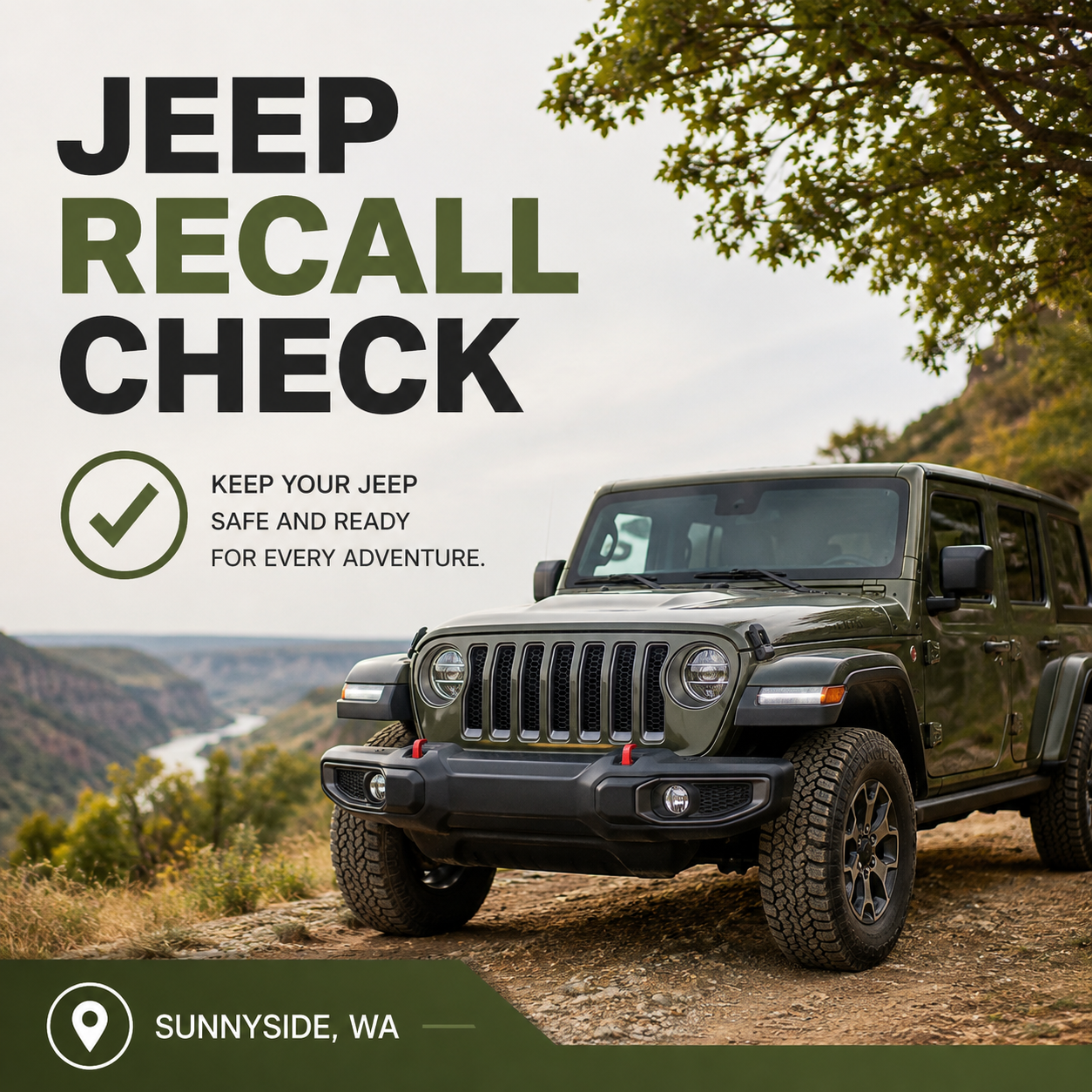
jeep service recall check

Jeep Recall Check

Owning a Jeep comes with a lot of pride. However, it also comes with the responsibility of staying on top of important safety updates. A Jeep recall can affect your vehicle's safety, performance, and reliability. Checking for open recalls is fast, free, and easy. If you're looking for a Jeep recall check in Sunnyside, WA, your local Speck CDJR service team is here to help. Here's everything you need to know about Jeep recalls and how your local Jeep dealer in Sunnyside, WA can help. What Is a Vehicle Recall? Simply put, a manufacturer triggers a recall the moment they discover a safety defect in a vehicle. The National Highway Traffic Safety Administration oversees all vehicle recalls in the United States. Fortunately, Jeep picks up the entire bill for every recall repair. You pay absolutely nothing out of pocket. That means your Jeep recall repair is completely free. Simply, bring your vehicle to an authorized Jeep dealer and our team will take care of the rest. Common recall areas include: Brakes and brake components Airbags and supplemental restraint systems Steering and suspension components Electrical systems and software updates Engine and fuel system components Why Jeep Recalls Matter A Jeep recall is not something to ignore or put off. Open recalls represent real safety concerns identified by engineers and safety regulators. Many drivers don't realize their vehicle has an open recall. Recall notices can get lost, go to old addresses, or simply be overlooked. For that reason, checking for open recalls regularly is so important. How to Check for Open Jeep Recalls Check by VIN at NHTSA.gov Go to nhtsa.gov and enter your Jeep's 17-digit Vehicle Identification Number. Your VIN can be found on the driver's side dashboard or door jamb sticker. The NHTSA database will show every open recall on your specific vehicle. Best of all, it is completely free and takes less than two minutes. Check at Mopar.com Enter your VIN at Mopar.com to see any open recalls specific to your Jeep. As a bonus, the site will also show you authorized dealers near you where the recall can be completed. Visit Your Jeep Dealer in Sunnyside, WA The easiest option is to visit Speck CDJR in Sunnyside. Our service team can pull up your vehicle's full recall history in just a few minutes. We will let you know exactly what open recalls exist and schedule the repair right away. Recall repairs are always completed at no charge to you. What Is a Recall Safety Check? A recall safety check is a quick inspection to identify any open recalls on your vehicle. More importantly, it focuses on known safety issues identified by the manufacturer or NHTSA. Our service team at Speck CDJR performs recall safety checks quickly and efficiently. We recommend having your Jeep checked for open recalls at every service visit. Which Jeep Models Have Had Recalls? Recalls can affect any vehicle. Some of the most commonly recalled Jeep models include: Jeep Wrangler: Fuel systems, electrical components, and software updates Jeep Grand Cherokee: Airbags, braking systems, and electrical components Jeep Cherokee: Software, steering, and powertrain components Jeep Compass: Electrical systems and software updates Jeep Gladiator: Safety systems and electrical components Schedule Your Recall Repair Today Scheduling your recall repair at Speck CDJR is easy: Online: Visit our website and click "Schedule Service" By Phone: Call our service department directly Walk-In: Stop by during service hours for a same-day recall check Our certified Jeep technicians will take care of your recall repair quickly, professionally, and at absolutely no cost to you. Don't put off an open recall. Schedule your recall safety check at your local Jeep dealer in Sunnyside, WA today. Check for Recalls The information provided is for general informational purposes only and does not constitute legal, financial, or professional advice. While we strive to provide accurate and up-to-date information, we make no guarantees regarding the completeness, accuracy, or reliability of the information presented. Any action you take based on the context of this blog is strictly at your own risk. Always consult a qualified professional or specialist for advice specific to your situation. We are not responsible for any losses or damages arising from the use of this blog or its content.
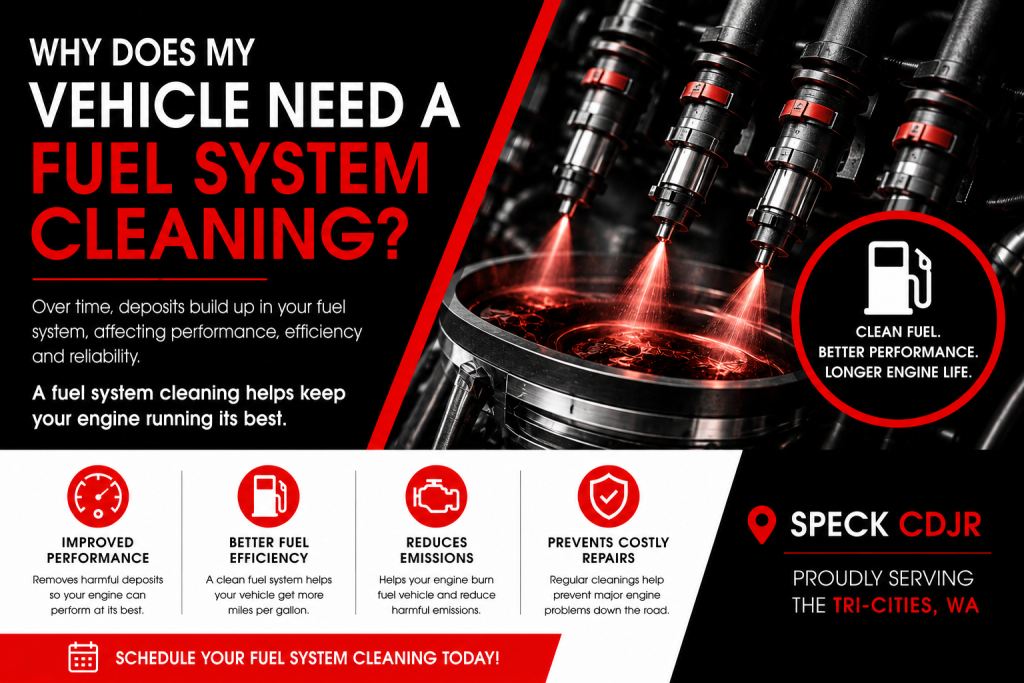
Why Does My Vehicle Need a Fuel System Cleaning?

If you've ever been told your vehicle needs a fuel system cleaning and wondered whether it's really necessary — you're not alone. Here's a straightforward explanation of what it is, why it matters, and how it benefits your Jeep, Ram, or any other vehicle you drive. What Is a Fuel System Cleaning? A fuel system cleaning removes built-up carbon deposits, varnish, and contaminants from the key components of your fuel delivery system. Over time these deposits build up inside your fuel injectors, throttle body, intake valves, and combustion chamber — quietly robbing your engine of performance and efficiency. A thorough fuel system cleaning covers: Fuel Injectors: Restores proper fuel spray patterns Throttle Body: Removes carbon buildup that restricts airflow Intake Valves & Ports: Clears deposits that disrupt the air-fuel mixture Combustion Chamber: Removes buildup that causes knocking and misfires Why Does My Vehicle Need One? Every time your engine runs, small amounts of carbon and varnish are left behind by the combustion process. Over time these deposits accumulate and start affecting how your vehicle drives. Here's what happens: Reduced Fuel Economy Clogged injectors deliver uneven fuel spray — meaning your engine burns more fuel to produce the same power. A clean fuel system restores proper delivery and can improve your miles per gallon. Loss of Power & Acceleration Deposits on intake valves restrict airflow and disrupt the air-fuel mixture. The result is sluggish acceleration and hesitation — especially noticeable when merging on the highway or towing. Rough Idle & Engine Misfires Partially clogged injectors cause inconsistent fuel delivery — leading to a rough idle, engine misfires, and sometimes a check engine light. Hard Starting Deposits in the fuel system can make your engine harder to start — especially in cold Eastern Washington winters or after the vehicle has sat for an extended period. Signs It's Time for a Fuel System Cleaning Watch for these warning signs: 📉 Noticeable drop in fuel economy 🐢 Sluggish or hesitant acceleration 💨 Rough idle or engine misfires 🔑 Hard starting — especially in cold weather ⚠️ Check engine light related to fuel or misfires Most service professionals recommend a fuel system cleaning every 30,000 to 60,000 miles. Local driving conditions — short trips, heavy towing, and older vehicles — can accelerate deposit buildup here in the Yakima Valley and Tri-Cities area. Jeep Service & Ram Service — We Know Your Vehicle Whether you drive a Jeep Wrangler, Grand Cherokee, or Gladiator — or a Ram 1500, 2500, or 3500 — our factory-trained technicians know your vehicle's fuel system inside and out. We use professional-grade cleaning equipment and manufacturer-approved agents — not off-the-shelf additives you pour into the gas tank. Check Our Service Specials Before your next visit, check our current service specials online. We regularly feature fuel system cleaning as part of broader maintenance packages — making it easier and more affordable to stay on top of this important service. Combining it with your oil change or multi-point inspection is a smart, cost-effective approach. Schedule Your Service at Speck CDJR Our service team at Speck CDJR in Sunnyside is ready to help — whether it's a standalone fuel system cleaning, part of a service special, or combined with your next Jeep service or Ram service appointment. Schedule online or stop by today. Schedule Service The information provided is for general informational purposes only and does not constitute legal, financial, or professional advice. While we strive to provide accurate and up-to-date information, we make no guarantees regarding the completeness, accuracy, or reliability of the information presented. Any action you take based on the context of this blog is strictly at your own risk. Always consult a qualified professional or specialist for advice specific to your situation. We are not responsible for any losses or damages arising from the use of this blog or its content.

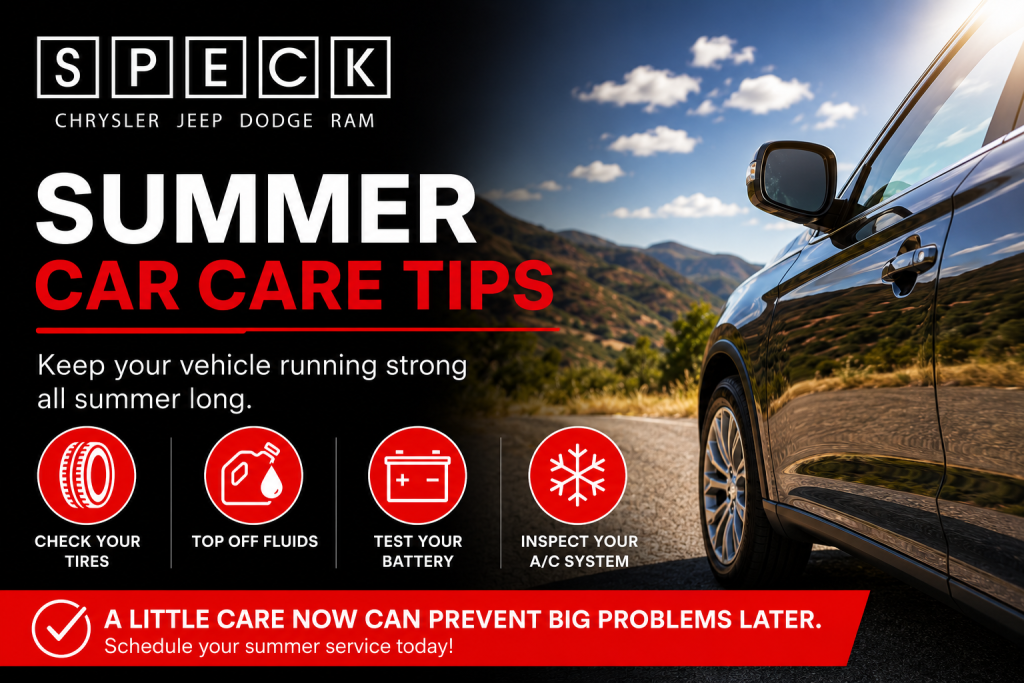
summer car care tips from speck cdjr

Summer Car Care Tips for Washington Drivers

Summer in Eastern Washington is no joke. With temperatures regularly hitting the 90s and 100s across the Yakima Valley and Tri-Cities, your vehicle works harder than it does any other time of year. The good news is that a little preventive maintenance goes a long way — and the team at Speck CDJR is here to help make sure your car, truck, or SUV is ready for everything summer throws at it. Here are the most important things to check before the heat peaks. Top Summer Car Care Tips Check Your Coolant & Cooling System: Your cooling system is your engine's first line of defense against summer heat. Low or old coolant can lead to overheating — one of the most common and costly summer breakdowns. Have your coolant level and condition checked, and inspect hoses and belts for cracks or wear while you're at it. Get an Oil Change: Motor oil breaks down faster in extreme heat, losing its ability to properly lubricate your engine. If you're due for an oil change — or close to it — don't put it off heading into summer. Fresh oil keeps your engine running cooler and more efficiently on long hot drives. Test Your Battery: Most people associate dead batteries with winter, but summer heat is actually harder on batteries than cold weather. High temperatures accelerate the chemical breakdown inside a battery and can cause it to fail without warning. If your battery is more than 3 years old, have it tested before the heat sets in. Service Your A/C System: A struggling A/C isn't just uncomfortable — it can signal a refrigerant leak or a failing compressor. If your air isn't blowing as cold as it used to, or if it takes a while to cool down the cabin, have your A/C inspected and recharged before the peak of summer. Yakima Valley heat is no time to discover your A/C is out. Technician checking brakes on a Jeep Top Off All Fluids: Summer heat affects more than just your coolant. Check and top off windshield washer fluid, brake fluid, power steering fluid, and transmission fluid. Keeping all fluids at proper levels ensures every system operates as it should during the hottest months. Inspect Your Tires: Heat causes tire pressure to rise, which increases the risk of a blowout — especially on long highway drives. Check your tire pressure when tires are cold, inspect tread depth, and look for any sidewall cracking or bulging. Don't forget to check your spare too. Check Your Brakes: If you're planning any summer road trips through mountain passes or along hilly terrain, your brakes deserve a look before you go. Worn brake pads or low brake fluid can put you in a dangerous situation on a long downhill stretch. Our service team can inspect brake pad thickness and overall brake system health quickly. Replace Wiper Blades: Summer storms in Eastern Washington can pop up fast. Worn wiper blades streak and skip, making it hard to see clearly when you need to most. Wiper blades are inexpensive and quick to replace — an easy win for summer safety. A Few Extra Summer Tips Park in the shade when possible. A shaded spot reduces interior temps significantly and protects your dashboard and upholstery from UV damage over time. Use a sunshade. A windshield sunshade can drop interior temps by 15–20°F and keep your steering wheel from becoming untouchable. Keep an emergency kit in your vehicle. Water, a first aid kit, jumper cables, and a phone charger are summer road trip essentials, especially on rural Eastern Washington roads. Never leave pets or kids in the car. Temperatures inside a parked car can exceed 140°F on hot days. Not even a few minutes is safe when it's this hot outside. Ready to get your vehicle summer-ready? The service team at Speck CDJR in Sunnyside is here to help. From oil changes and A/C service to brake inspections and tire checks, we've got everything you need to stay safe and comfortable all summer long. Schedule your summer service appointment online or stop by — we'll get you in and out and back on the road. Schedule Appointment Service Specials The information provided is for general informational purposes only and does not constitute legal, financial, or professional advice. While we strive to provide accurate and up-to-date information, we make no guarantees regarding the completeness, accuracy, or reliability of the information presented. Any action you take based on the context of this blog is strictly at your own risk. Always consult a qualified professional or specialist for advice specific to your situation. We are not responsible for any losses or damages arising from the use of this blog or its content.