



Eco-Friendly Driving Tips
Earth Day is coming up, and we want to provide some great tips on reducing your carbon footprint during your weekly commutes! With these tips, you’ll be on the right track to saving time, saving fuel, and saving the planet.
Consolidate Your Trips
Making small trips to complete errands throughout your week can add to your carbon footprint. Sending those packages, getting groceries and maybe a haircut — if you can plan some time in your week, these errands can be completed all in the same trip.
Carpool When Available
Carpooling is a great way to save you and your friends, coworkers or classmates the extra fuel, emissions, and time finding a parking spot. With those 3 extra passengers that would normally drive individually, that’s three extra vehicles off the road.
Use Public Transportation
Public transportation will always be available, and is a great way to get around. Even using public transportation just a few times a week can save miles, fuel, and reduce your carbon footprint. Many public transportation systems have core values to increase environmental quality and encourage alternative transportation opposed to a Single Occupancy Vehicle.
Avoid Driving Aggressively
Putting the pedal to the medal at every green light causes your engine to work harder than it needs to, and expending unnecessary amounts of fuel. Take it slower.
Clear Out Unnecessary Items in Your Car
Even if they are small items, the weight adds up. Added weight to the car creates more work for the engine, which will use more fuel and energy! Be sure to keep your vehicle free of those extra items.
The information provided is for general informational purposes only and does not constitute legal, financial, or professional advice. While we strive to provide accurate and up-to-date information, we make no guarantees regarding the completeness, accuracy, or reliability of the information presented. Any action you take based on the context of this blog is strictly at your own risk. Always consult a qualified professional or specialist for advice specific to your situation. We are not responsible for any losses or damages arising from the use of this blog or its content.
How to Get the Most Out of Your Test Drive
Do Your Research
Knowing what you are looking for by choosing a few vehicles of interest helps to narrow down your vehicle search and prevents the need to test drive any car that you would not be interested in. Heated seats and great mileage a must have? Narrow those choices down before you head to the dealer.

Set Up an Appointment
Setting a test drive appointment not only helps us, but helps you as well. You can always come on in and test drive during our open hours, but this could mean more time searching and less time driving. Setting up a test drive appointment with us ensures that we can get your vehicle choices cleaned and ready to drive so there’s no waiting or looking for the vehicle. Our Speck Family Dealerships have more than one lot where we keep all of our inventory, so making your appointment is the most convenient route for both of us!
Ask Questions
We always want to make sure you have all the information you are looking for! Do not be afraid to ask questions during your test drive. These questions include not only questions for our sales team and management, but also questions for yourself. When you’re taking your test drive, be sure to go through your mental checklist!
Here are some example questions to ask yourself:
- Does this vehicle have everything I need?
- Will I need this much space?
- Will I need more space?
- Is this something my family will enjoy?
Whether you have financial questions, vehicle history questions or even miscellaneous questions, we are always happy to help. Asking questions and getting all the information you need can not only make the test-driving and car-buying process go smoothly, but also gives you peace-of-mind about the big purchase you’re making.
Call the experts at Speck Chrysler Jeep Dodge Ram for more information or schedule your test drive online.
The information provided is for general informational purposes only and does not constitute legal, financial, or professional advice. While we strive to provide accurate and up-to-date information, we make no guarantees regarding the completeness, accuracy, or reliability of the information presented. Any action you take based on the context of this blog is strictly at your own risk. Always consult a qualified professional or specialist for advice specific to your situation. We are not responsible for any losses or damages arising from the use of this blog or its content.
What is Chrysler’s Stow N’ Go Seating?
What is Chrysler’s Stow ‘N Go Seating?
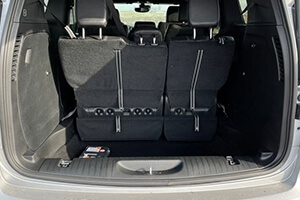
Chrysler’s Stow ‘N Go seating is a great feature that allows you to completely hide away all rear seats, leaving you with plenty of cargo space in the back of your Chrysler van. Stow ‘N Go seating was introduced in mini-van models in 2005 and continues to improve each year.
How to Use Stow ‘N Go Seating
- Move the front seat forward using a Stow ‘N Go assist button located behind the front seat.
- Fold up the 2nd row armrests, and open the floor panels located in front the seats, leaving the panels open.
- Pull the “Stow ’N Go” strap at the bottom of the seats, which fold it forward.
- From the folded seat position, lead the seat into the opened cargo space and close the floor panels.
- The 3rd row seating stows in the cargo floor, making the rear cargo area flat and ready for cargo.
Visit us in Sunnyside to experience Stow N’ Go seating on the Chrysler Pacifica today!
The information provided is for general informational purposes only and does not constitute legal, financial, or professional advice. While we strive to provide accurate and up-to-date information, we make no guarantees regarding the completeness, accuracy, or reliability of the information presented. Any action you take based on the context of this blog is strictly at your own risk. Always consult a qualified professional or specialist for advice specific to your situation. We are not responsible for any losses or damages arising from the use of this blog or its content.
What are the warranties that come with a new Jeep?
New Vehicle Basic Limited Warranty
3 years/36,000 miles
This warranty covers parts and labor of any repair need performed due to defective parts or materials, factory production or workmanship. Any warranty repairs are at no cost to you. The warranty begins the date of the vehicle delivery or when the vehicle is first put to used as a “demo” at the dealership. The warranty ends after 3 years or 36,000 miles on the odometer- whichever comes first. There are certain wear and tear components that are only covered for the first year or 12,000 miles on the odometer. These components include: Brakes, Bulbs, Clutch Discs or Modular Clutch Assembly, Wheel Alignment, Wheel Balancing, Windshield & Rear Window, and Wiper Blades.
Anti-Corrosion Perforation Limited Warranty
3 years/Unlimited miles | 5 years/Unlimited miles
This warranty is split into two different categories: Corrosion on all sheet metal panels and corrosion on outer-body sheet metal panels. The anti-corrosion perforation limited warranty covers parts and labor to replace or repair only panels that get holes or damage from only corrosion and rust. For all sheet metal panels this warranty lasts 3 years with no mileage limit. For outer-body finish-painted sheet metal panels, this lasts 5 years/Unlimited miles.
Powertrain Limited Warranty
5 years/60,000 miles
The Powertrain Limited Warranty covers many components of your Jeep including the Gas Engine, Transmission (case and internal parts) and Drivetrain (FWD, RWD, AWD, 4WD). This Powertrain warranty is active for 5 years or 60,000 miles, whichever happens first. It does not cover manual transmission clutch parts, vehicle modifications, and more.
Federal Emission Warranty
2 years/24,000 miles
This warranty covers the parts of the Jeep that are working the emissions system. Most parts are also covered by the 3 year/36,000-mile New Vehicle Basic Limited Warranty. If your Jeep is equipped with one of these, this federal warranty will cover these parts for 8 years or 80,000 miles:
• Belt Driven Hybrid Starter Generator
• Catalytic Converter
• Powertrain Control Module (PCM)
• Power Pack Unit – 48 Volts
• Transmission Control Module (TCM)
This can also cover the cost of repairs or adjustments that are needed due to an emissions test, but only if the vehicle is well-maintained and has failed the test or if a penalty such as a fine or loss of vehicle due to failure of the test.
When and Why Should I Rotate My Tires?
Tire rotations are important to tire health, as this service ensures that they are wearing evenly. Uneven wear can result in a blow out or a sooner-than-expected tire replacement. The drive tires usually wear faster, either the front or the rear wheels, depending on the drivetrain of your vehicle (Rear Wheel Drive or Front Wheel Drive). The drive tires do more work as they receive more power and turn the vehicle, adding weight and friction to different tires.
Mopar recommends a tire rotation every 6,000 – 8,000 miles, but it’s always important to check your owner’s manual to see when the ideal mileage interval is for a tire rotation. When getting a tire rotation, the wheels are rotated specifically to match the drive train.
Call our experts today to find out if your vehicle is ready for a tire rotation!
The information provided is for general informational purposes only and does not constitute legal, financial, or professional advice. While we strive to provide accurate and up-to-date information, we make no guarantees regarding the completeness, accuracy, or reliability of the information presented. Any action you take based on the context of this blog is strictly at your own risk. Always consult a qualified professional or specialist for advice specific to your situation. We are not responsible for any losses or damages arising from the use of this blog or its content.
What does Jeep’s Desert Rated Badge mean?
Recently in 2020, Jeep introduced the Jeep Gladiator Mojave, the first Jeep vehicle to sport the Desert Rated badge. The Desert Rated badge is a sibling of Jeep’s well-known Trail Rated badge, earned through a rigorous course of testing. For a Jeep to become Desert Rated, it must succeed in five different categories: Traction, Ride Control and Stability, Ground Clearance, Maneuverability, and Desert Prowess.
Traction:
Sand is unpredictable and it can be difficult to determine where the tough areas of the dunes are. This is where Jeep asks, “Why not be able to drive through it all?”. The Jeep is tested to power through loose sand, gravel and dirt.
Ride Control and Stability:
When riding the dunes, stability is extremely important when turning through the uneven terrain. On the Desert Rated Gladiator Mojave, the upgraded FOX brand shocks were put to the test, absorbing the impact of the rough, desert ride.
Ground Clearance:
A Desert Rated Jeep must be able to clear those big, tough dunes. It provides the ability to drive over instead of around those obstacles without underbody damage. Desert Rated ground clearance is tested on steep angles and hills to test the optimized suspension.
Maneuverability: Gliding through the sand, the snow, whatever the terrain may be, is something a Desert Rated Jeep is tested to be capable of. This test determines how well the Jeep can take on twists and turns while treading through tough terrain.
Desert Prowess: Can the Jeep handle the extremes of the desert? A Jeep that succeeds in the Desert Prowess category can handle the extreme heat and withstand the dust of the desert climate.
Jeep plans on adding more models to the Desert Rated Jeep family in the near future. These vehicles will be tested on a newly-created Desert Rated proving grounds in Arizona. in the meantime, shop our new Jeep inventory online.
The information provided is for general informational purposes only and does not constitute legal, financial, or professional advice. While we strive to provide accurate and up-to-date information, we make no guarantees regarding the completeness, accuracy, or reliability of the information presented. Any action you take based on the context of this blog is strictly at your own risk. Always consult a qualified professional or specialist for advice specific to your situation. We are not responsible for any losses or damages arising from the use of this blog or its content.
What does Jeep’s Trail Rated badge mean?
On many Jeeps you may have heard the term “Trail Rated” or have seen the well-earned Trail Rated 4×4 badge on various Jeep models. Earning the badge requires the Jeep model to succeed in rigorous testing out of five different categories: Traction, Water Fording, Ground Clearance, Articulation, and Maneuverability.
Traction:
When testing traction, the 4×4 Jeep is taken through tough terrain — including mud, snow, and slippery wet conditions. The goal of the test is to see if the Jeep can ultimately take on a snowy road trip home or an unpredictable off-road adventure, and to ensure a good grip in unpredictable conditions.
Water Fording:
A Trail Rated Jeep’s electrical connections and openings of the body are sealed, and the air intake is integrated higher up in the vehicle, giving the Jeep a great capability to ford the waters. This test takes the Jeep through high waters and deep puddles to prove its aquatic proficiency.
Disclaimer from Jeep: “Do not attempt water-fording unless depth is known to be less than 19-30 inches. Water depth varies depending on model.”
Ground Clearance:
Trail Rated 4×4 Jeeps are built and tested to withstand driving over obstacles such as large rocks and logs without sustaining any damage to the underbody of the vehicle. The Jeep is driven into extreme off-road conditions, taking on large rocks and hills. Obstacles? A thing of the past.
Articulation:
Testing the articulation means to evaluate the capability of the Jeep to keep as many tires on the ground as possible, and to determine how flexible the suspension is on extremely rough surfaces.
Maneuverability:
With enhanced wheelbases and more-than-capable steering, the Trail Rated Jeeps are driven into tough situations of defensive maneuvers and times of tight steering. In any case, it’s important to be able to get out of a sticky circumstance or avoid the unexpected.
Places of testing:
After the initial assessment at the FCA facility in the potentially harsh cold of Northern Michigan, the Jeep models are then sent to different areas of various climates to perform the ultimate, Trail Rated tests. These areas include Moab, Utah and The Rubicon Trail, California. These tests are backed by the Nevada Automotive Test Center – a big name in military-grade vehicle testing!
The information provided is for general informational purposes only and does not constitute legal, financial, or professional advice. While we strive to provide accurate and up-to-date information, we make no guarantees regarding the completeness, accuracy, or reliability of the information presented. Any action you take based on the context of this blog is strictly at your own risk. Always consult a qualified professional or specialist for advice specific to your situation. We are not responsible for any losses or damages arising from the use of this blog or its content.
2021 Jeep Cherokee Exterior and Interior Colors
Since the mid-1970’s, the Jeep Cherokee has a been brand staple, providing drivers with a great 4×4 SUV experience. Nowadays, along with advanced technology that has created a versatile Cherokee, but Jeep offers a real way to personalize – with color!
The 2021 Jeep Cherokee has 8 different trim levels to choose, each with an available set of color options.
What are the 2021 Cherokee exterior colors?
2021 Jeep Cherokee Latitude colors are Diamond Black Crystal (Pearl-Coat), Billet Silver Metallic (Clear-Coat), Slate Blue (Pearl-Coat), Velvet Red (Pearl-Coat), Spitfire Orange (Clear-Coat), Olive Green (Pearl-Coat), Light Brownstone (Pearl-Coat), and Bright White (Clear-Coat).
2021 Jeep Cherokee Latitude Plus colors are Diamond Black Crystal (Pearl-Coat), Granite Crystal Metallic (Clear-Coat), Sting-Gray (Clear-Coat), Billet Silver Metallic (Clear-Coat), Slate Blue (Pearl-Coat), Sangria Metallic (Clear-Coat), Velvet Red (Pearl-Coat), Spitfire Orange (Clear-Coat), Olive Green (Pearl-Coat), Light Brownstone (Pearl-Coat), and Bright White (Clear-Coat).
2021 Jeep Cherokee Altitude colors are Diamond Black Crystal (Pearl-Coat), Granite Crystal Metallic (Clear-Coat), Billet Silver Metallic (Clear-Coat), Bright White (Clear-Coat), Hydro Blue (Pearl-Coat), Velvet Red (Pearl-Coat), and Spitfire Orange (Clear-Coat).
2021 Jeep Cherokee Latitude Lux colors are Diamond Black Crystal (Pearl-Coat), Granite Crystal Metallic (Clear-Coat), Sting-Gray (Clear-Coat), Billet Silver Metallic (Clear-Coat), Hydro Blue (Pearl-Coat), Slate Blue (Pearl-Coat), Sangria Metallic (Clear-Coat), Velvet Red (Pearl-Coat), Spitfire Orange (Clear-Coat), Olive Green (Pearl-Coat), Light Brownstone (Pearl-Coat), and Bright White (Clear-Coat).
2021 Jeep Cherokee Latitude 80th Anniversary colors are Diamond Black Crystal (Pearl-Coat), Granite Crystal Metallic (Clear-Coat), Hydro Blue (Pearl-Coat), Slate Blue (Pearl-Coat), Sangria Metallic (Clear-Coat), Velvet Red (Pearl-Coat), Spitfire Orange (Clear-Coat), Olive Green (Pearl-Coat), Light Brownstone (Pearl-Coat), and Bright White (Clear-Coat).
2021 Jeep Cherokee Limited colors are Diamond Black Crystal (Pearl-Coat), Granite Crystal Metallic (Clear-Coat), Billet Silver Metallic (Clear-Coat), Bright White (Clear-Coat), Slate Blue (Pearl-Coat), Velvet Red (Pearl-Coat), Olive Green (Pearl-Coat), and Light Brownstone (Pearl-Coat).
2021 Jeep Cherokee Trailhawk colors are Diamond Black Crystal (Pearl-Coat), Granite Crystal Metallic (Clear-Coat), Billet Silver Metallic (Clear-Coat), Bright White (Clear-Coat), Olive Green (Pearl-Coat), Hydro Blue (Pearl-Coat), Sangria Metallic (Clear-Coat), Velvet Red (Pearl-Coat), and Spitfire Orange (Clear-Coat) and Light Brownstone (Pearl-Coat).
2021 Jeep Cherokee High Altitude colors are Diamond Black Crystal (Pearl-Coat), Granite Crystal Metallic (Clear-Coat), Sting-Gray (Clear-Coat), Billet Silver Metallic (Clear-Coat), Slate Blue (Pearl-Coat), Sangria Metallic (Clear-Coat), Velvet Red (Pearl-Coat), Spitfire Orange (Clear-Coat), Olive Green (Pearl-Coat), and Bright White (Clear-Coat).
What are the available 2021 Jeep Cherokee interior fabric and colors?
2021 Jeep Cherokee Latitude interior upholstery and colors include Ombre cloth fabric in Black or Light Frost Beige with Black.
2021 Jeep Cherokee Latitude Plus interior upholstery and colors include Socket cloth fabric in Black or Light Frost Beige with Black.
2021 Jeep Cherokee Altitude interior upholstery and colors includes Socket cloth fabric in Black with Storm Blue Accent Stitching
2021 Jeep Cherokee Latitude Lux interior upholstery and colors includes Nappa Leather in Black with Light Frost Beige Accent Stitching or Ski Gray with Cattle Tan Accent Stitching.
2021 Jeep Cherokee Latitude 80th Anniversary interior upholstery and colors include Nappa Axis II Perforated leather with Tungsten Accent Stitching
2021 Jeep Cherokee Limited interior upholstery and colors includes Nappa Leather Trim in Ski Gray with Cattle Tan Accent Stitching or Black with Light Frost Beige Accent Stitching.
2021 Jeep Cherokee Trailhawk interior upholstery and colors Socket Cloth with Premium Vinyl or Perforated Leather Trim in Black with Ruby Red Accent Stitching.
2021 Jeep Cherokee High Altitude interior upholstery and colors includes Nappa Leather Trim in Black with Light Frost Beige Accent Stitching.
The information provided is for general informational purposes only and does not constitute legal, financial, or professional advice. While we strive to provide accurate and up-to-date information, we make no guarantees regarding the completeness, accuracy, or reliability of the information presented. Any action you take based on the context of this blog is strictly at your own risk. Always consult a qualified professional or specialist for advice specific to your situation. We are not responsible for any losses or damages arising from the use of this blog or its content.
History of the New Year’s Resolution
Throughout history, the new year has always been celebrated with different traditions – earliest recordings dating back to ancient Babylonia! For the Babylonians, the new year began in Mid-March when new crops were planted. During a long 12-day celebration, it was tradition to promise to their gods to pay debts and to bring back any borrowed objects. These promises were considered the earliest known new year’s resolutions.new_years_resolutions_blog.jpeg
In 46 B.C., Julius Caesar deemed January 1st as the beginning of the new year. In this, he created a 365-day calendar model very similar to the one we use today (Although the calendar was later “fixed” due to an 11-minute error in matching Earth’s revolution around the Sun). The month of January was named after two-faced Roman god Janus. Janus was considered the god of doorways, beginnings and endings, transition and time. When moving to the new year, it was believed one of Janus’ face looks to the past while the other oversees the future year. Because of this belief, many Romans made offerings and promises to Janus in hopes of the god bringing good fortune to their new year.
Many instances of new year resolutions have been performed throughout many cultures in history, but the first known use of the phrase ‘new year resolution’ was in an article from a Boston newspaper from January 1st, 1813, entitled “The Friday Lecture”:
“And yet, I believe there are multitudes of people, accustomed to receive injunctions of new year resolutions, who will sin all the month of December, with a serious determination of beginning the new year with new resolutions and new behaviour, and with the full belief that they shall thus expiate and wipe away all their former faults.” – Unknown
Most of us are good at making resolutions for the new year, but are we equally good at sticking to them? What’s your new year’s resolution?
The information provided is for general informational purposes only and does not constitute legal, financial, or professional advice. While we strive to provide accurate and up-to-date information, we make no guarantees regarding the completeness, accuracy, or reliability of the information presented. Any action you take based on the context of this blog is strictly at your own risk. Always consult a qualified professional or specialist for advice specific to your situation. We are not responsible for any losses or damages arising from the use of this blog or its content.
As Winter approaches and the weather becomes more unpredictable, you may be considering upgrading to an All-Wheel-Drive SUV!
All-Wheel-Drive vehicles are known for providing better traction and acceleration during inclement weather. If a wheel or two slips, the other wheels provide the ability to continue to drive to help push your vehicle forward.
We an amazing selection of used SUVs for sale at Speck Chrysler Jeep Dodge Ram. We have great gas-saving options, fuel-efficient models, basic rides, high-tech rides and more. Go ANYWHERE this winter!
The information provided is for general informational purposes only and does not constitute legal, financial, or professional advice. While we strive to provide accurate and up-to-date information, we make no guarantees regarding the completeness, accuracy, or reliability of the information presented. Any action you take based on the context of this blog is strictly at your own risk. Always consult a qualified professional or specialist for advice specific to your situation. We are not responsible for any losses or damages arising from the use of this blog or its content.
Connect with us
