





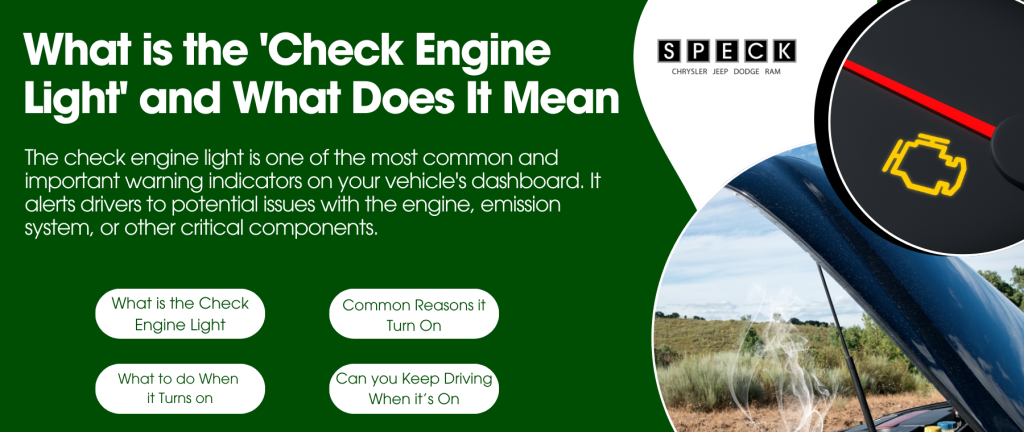
The check engine light (CEL) is one of the most common and important warning indicators on your vehicle’s dashboard. It alerts drivers to potential issues with the engine, emission system, or other critical components. Understanding what this light means and how to respond can help prevent costly repairs and ensure your vehicle runs smoothly.
1. What is the Check Engine Light?
The CEL, also known as te malfunction indicator lamp (MIL), is part of your vehicle’s onboard diagnostic system (OBD-II). When a problem is detected, the light illuminates to notify the driver that something requires attention.
2. Common Reasons the Check Engine Light Turns On
Several issues can trigger the CEL, ranging from minor to severe problems:
- Loose or Faulty Gas Cap: A loose, cracked, or missing gas cap can cause the light to turn on due to fuel vapor escaping.
- Oxygen Sensor Failure: A malfunctioning oxygen sensor affects fuel efficiency and emission.
- Catalytic Converter Issues: If the catalytic converter is failing, it can reduce performance and increase emissions.
- Mass Airflow Sensor (MAF Problems): This sensor controls how much air enters the engine, issues can cause rough idling and poor fuel economy.
- Spark Plug or Ignition Coil Failure: Faulty spark plugs can lead to engine misfires, decreased performance, and higher fuel consumption.
- Battery or Alternator Issues: Electric system problems can sometimes trigger the CEL.
3. What to Do When the Check Engine Light Comes On
If your CEL turns on, follow these steps:
- Check Your Gas Cap: Tighten it and see if the light turns off after a few drives.
- Observe Vehicle Performance: If the car runs normally, the issue may not be urgent, but you should still have it checked.
- Look for Flashing Light: A flashing check engine light indicates a severe issue, like an engine misfire, and requires immediate attention.
- Use an OBD-II Scanner: Many auto parts stores offer free diagnostics to determine the trouble code causing the issue.
- Schedule a Professional Inspection: If the light stays on, take your vehicle to a certified mechanic for a thorough diagnosis.
4. Can You Keep Driving with the Check Engine Light On?
- If the Light is Steady: You can usually continue driving but should schedule a service appointment soon.
- If the Light is Flashing: Stop driving immediately to prevent further damage and have the vehicle inspected as soon as possible.
Schedule Your Service Appointment in Sunnyside
The CEL is your vehicle’s way of telling you something needs attention. While some issues are minor, others can lead to significant repairs if ignored. If your engine light comes on, take the time to diagnose the problem or seek professional help to keep your car running safely and efficiently.
The information provided is for general informational purposes only and does not constitute legal, financial, or professional advice. While we strive to provide accurate and up-to-date information, we make no guarantees regarding the completeness, accuracy, or reliability of the information presented. Any action you take based on the context of this blog is strictly at your own risk. Always consult a qualified professional or specialist for advice specific to your situation. We are not responsible for any losses or damages arising from the use of this blog or its content.
Connect with us
