




Speck Chrysler Jeep Dodge Ram

Blog

All Car Tips Automotive Service and Repair Jeep Ram Automotive How-To Guides Chrysler Dodge Auto Parts Automotive Financing Automotive Lease Dealership Blog Fleet and Commercial Vehicles Holiday Trade-in Value Used Cars, Trucks and SUVs Local Events Sales

Why Is a Ram Great for Your Business?

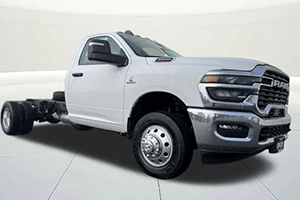
Ram Commercial Vehicles: Versatile Upfits to Fit Your Needs Ram commercial vehicles include the Ram ProMaster, Ram ProMaster City, Ram Chassis Cab, Ram 2500 and 3500, and Ram 1500. These Ram vehicles have available upfits from Ram that can make the job easier with Construction Upfits, Telecom Upfits, HVAC Upfits, Plumbing Upfits and more. Ram Trucks: Towing Capability Ram trucks are built to get the job done! Check out towing capacities below: Ram Chassis Cab: can tow up to 20,490lbs. when properly equipped, and with the dual rear wheel options, it can tow up to 25,650 pounds. Ram 2500: can tow between roughly 16,000-20,000 pounds depending on the truck’s gas/diesel engine and equipment. Ram 3500: can tow between roughly between 18,000 and just over 37,000 pounds with the 6.7L High-Output Cummins Turbo Diesel engine. Towing capacities can be different with each vehicle. Please refer to the owner’s manual for towing with your specific Ram commercial vehicle! Ram ProMaster Commercial Van Ram Vans: ProMaster has Plenty of Space The Ram ProMaster City is perfect for efficient commuting and taking your small business on-the-go. It has a maximum cargo volume of 131.7 cubic feet. The cargo area has a length of 7’3”, a height of 4’4”, and width of 5’0”. The Ram ProMaster van is larger, and can take on bigger projects with many upfitting options. The ProMaster van has a maximum cargo volume of 259 cubic feet. It has a cargo length of 8’, height of 5’6”, and width of 6’3”. Ready to get a new Ram for your business? Learn more about our Fleet and Commercial Sales today. Shop Work Trucks The information provided is for general informational purposes only and does not constitute legal, financial, or professional advice. While we strive to provide accurate and up-to-date information, we make no guarantees regarding the completeness, accuracy, or reliability of the information presented. Any action you take based on the context of this blog is strictly at your own risk. Always consult a qualified professional or specialist for advice specific to your situation. We are not responsible for any losses or damages arising from the use of this blog or its content.
New 2021 Ram Truck Warranties

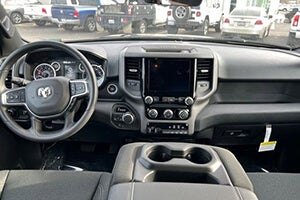
The new 2021 Ram truck gas engine has a variety of warranties, such as: Basic Limited Warranty for 3 years/36,000 miles (whichever comes first). Anti-Corrosion Perforation Limited Warranty for all panels 3 years, unlimited miles, and outer panels are covered for 5 years, unlimited miles. Powertrain Limited Warranty for 5 years/60,000 miles (whichever comes first) Ram Basic Limited Warranty Coverage The Basic Warranty covers the replacement or repair of any defective parts or systems at no cost to you, excluding tires and any headphones. Repairs are only covered under warranty if the issue was from factory workmanship or defective stock parts. Items with 12 month or 12,000 miles coverage, including: brakes bulbs wheel alignment and balancing wiper blades windshield and more Ram Anti-Corrosion Perforation Limited Warranty Coverage The Anti-Corrosion Warranty coverage includes the replacement or repair of damage or holes in the truck’s sheet panels due to rust or natural corrosion. Corrosion from vehicle alteration, salt or sand, ocean spray, extensive chemical transport, and other third-party causes are not covered. Ram Powertrain Limited Warranty Coverage The Powertrain Limited Warranty covers your vehicle’s powertrain, including the engine and internal working parts, All-Wheel-Drive/Rear-Wheel Drive/Front-Wheel Drive systems, transmission and more. Be sure to view your Ram’s owner manual for full details and limitations of your warranty. Shop New Ram Trucks The information provided is for general informational purposes only and does not constitute legal, financial, or professional advice. While we strive to provide accurate and up-to-date information, we make no guarantees regarding the completeness, accuracy, or reliability of the information presented. Any action you take based on the context of this blog is strictly at your own risk. Always consult a qualified professional or specialist for advice specific to your situation. We are not responsible for any losses or damages arising from the use of this blog or its content.
Can the Chrysler Pacifica Minivan Tow?

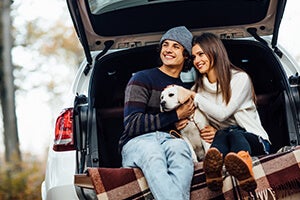
Can the Chrysler Pacifica minivan tow? The answer is yes! When your Chrysler Pacifica is equipped with the Trailer Tow Group, it comes with trailer-tow four- and seven-pin wiring harness, Class II 2-in. hitch receiver, Trailer-sway Damping, heavy-duty radiator and 220-amp alternator. 2021 Chrysler Pacifica Towing Capability The Gross Vehicle Weight Rating (GVWR) determines how much your Pacifica can hold inside, passengers and all. The GVWR of the Chrysler Pacifica Touring Front-Wheel-Drive and Chrysler Pacifica Touring L Front-Wheel-Drive is 6,055lbs. The GVWR of the Chrysler Pacifica Touring All-Wheel-Drive, Chrysler Pacifica Touring L All-Wheel-Drive, Pacifica Limited AWD and Pinnacle AWD have a GVWR of 6,300 lbs. The Chrysler Pacifica’s spacious cabin and family-friendly features accompany the versatility of available all-wheel-drive and great tow capabilities. Order your Pacifica with Speck Chrysler Jeep Dodge Ram of Sunnyside, WA. Give us a call at 509-402-2705 to get your Pacifica! Shop New Chrysler Inventory The information provided is for general informational purposes only and does not constitute legal, financial, or professional advice. While we strive to provide accurate and up-to-date information, we make no guarantees regarding the completeness, accuracy, or reliability of the information presented. Any action you take based on the context of this blog is strictly at your own risk. Always consult a qualified professional or specialist for advice specific to your situation. We are not responsible for any losses or damages arising from the use of this blog or its content.

What Are the Ram Truck Cab Options?

Learn about available Ram truck cab options and find the right size to fit your driving needs. Regular Cab: Seats Up to 3 The regular cab is the smallest of the cab sizes, providing seating for up to three passengers in one row with a door on each side. Quad Cab: Seats Up to 6 The quad cab seats up to six passengers. Its configuration includes a rear bench seat. On the 2021 Ram 1500, the Quad Cab provides 35.6 inches of rear leg room. The Quad Cab is like an extended cab, but with an assurance of four doors. Crew Cab: More Room for Passengers The crew cab seats up to six passengers with plenty of rear leg room measuring at 45.2 inches. Many buyers love the Crew Cab as it provides plenty of room for the family and doubles as a workhorse to get the job done. Mega Cab: Ultimate Passenger Space The Ram Truck’s Mega Cab provides the ultimate passenger experience with plenty of room for everyone, as well as an additional space behind the rear seats for cargo. The Mega Cab is found on the Heavy Duty 2021 Ram 2500 & 3500 truck models and seats up to six passengers. The rear leg room on the Mega Cab is 43.1 inches. Shop New Ram Trucks The information provided is for general informational purposes only and does not constitute legal, financial, or professional advice. While we strive to provide accurate and up-to-date information, we make no guarantees regarding the completeness, accuracy, or reliability of the information presented. Any action you take based on the context of this blog is strictly at your own risk. Always consult a qualified professional or specialist for advice specific to your situation. We are not responsible for any losses or damages arising from the use of this blog or its content.

Tips on Driving with Your Dog

Keep your dog attended to at all times. Take your best friend with you! When you’re leaving the car, make sure that your dog gets to go too. A car can reach scorching temperatures on even a 70-degree day so always make sure your dog is safe at home before you have to run errands where your dog is unable to come along. Be sure your dog has their identification. Exploring is one of your dog’s favorite things to do, so it’s important that your dog is prepared with the proper identification in case exploring gets the best of them! It’s also great to consider getting a microchip for your best friend. Don’t let your dog ride loose in your truck bed. This can be very dangerous as you never know what may happen when you’re on the road. If you are involved in an accident, your dog has a high risk of serious injury in the truck bed. Keeping your dog inside the cabin is the safest place for your dog to ride. If you cannot keep them in the cabin, keep a secured kennel in the back of the truck. Always have extra pet supplies. From a water bowl and water, to rolls of waste bags, it’s important to make sure you’ll have everything you’ll need to keep your pet happy, healthy and safe when traveling. Pet accessories can make their ride more comfortable. There are so many accessories out there designed to keep your pet safe when in the car! These include pet nets to prevent your pet from entering the driver’s area or front of the cabin, backseat extenders to increase your seat space for your pet, seat belt leashes and more! The information provided is for general informational purposes only and does not constitute legal, financial, or professional advice. While we strive to provide accurate and up-to-date information, we make no guarantees regarding the completeness, accuracy, or reliability of the information presented. Any action you take based on the context of this blog is strictly at your own risk. Always consult a qualified professional or specialist for advice specific to your situation. We are not responsible for any losses or damages arising from the use of this blog or its content.
Eco-Friendly Driving Tips

Earth Day is coming up, and we want to provide some great tips on reducing your carbon footprint during your weekly commutes! With these tips, you’ll be on the right track to saving time, saving fuel, and saving the planet. Consolidate Your Trips Making small trips to complete errands throughout your week can add to your carbon footprint. Sending those packages, getting groceries and maybe a haircut — if you can plan some time in your week, these errands can be completed all in the same trip. Carpool When Available Carpooling is a great way to save you and your friends, coworkers or classmates the extra fuel, emissions, and time finding a parking spot. With those 3 extra passengers that would normally drive individually, that’s three extra vehicles off the road. Use Public Transportation Public transportation will always be available, and is a great way to get around. Even using public transportation just a few times a week can save miles, fuel, and reduce your carbon footprint. Many public transportation systems have core values to increase environmental quality and encourage alternative transportation opposed to a Single Occupancy Vehicle. Avoid Driving Aggressively Putting the pedal to the medal at every green light causes your engine to work harder than it needs to, and expending unnecessary amounts of fuel. Take it slower. Clear Out Unnecessary Items in Your Car Even if they are small items, the weight adds up. Added weight to the car creates more work for the engine, which will use more fuel and energy! Be sure to keep your vehicle free of those extra items. Shop Eco-Friendly Used Inventory Explore Electric Vehicles The information provided is for general informational purposes only and does not constitute legal, financial, or professional advice. While we strive to provide accurate and up-to-date information, we make no guarantees regarding the completeness, accuracy, or reliability of the information presented. Any action you take based on the context of this blog is strictly at your own risk. Always consult a qualified professional or specialist for advice specific to your situation. We are not responsible for any losses or damages arising from the use of this blog or its content.

How to Get the Most Out of Your Test Drive

Do Your Research Knowing what you are looking for by choosing a few vehicles of interest helps to narrow down your vehicle search and prevents the need to test drive any car that you would not be interested in. Heated seats and great mileage a must have? Narrow those choices down before you head to the dealer. Schedule Appointment Online Set Up an Appointment Setting a test drive appointment not only helps us, but helps you as well. You can always come on in and test drive during our open hours, but this could mean more time searching and less time driving. Setting up a test drive appointment with us ensures that we can get your vehicle choices cleaned and ready to drive so there’s no waiting or looking for the vehicle. Our Speck Family Dealerships have more than one lot where we keep all of our inventory, so making your appointment is the most convenient route for both of us! Ask Questions We always want to make sure you have all the information you are looking for! Do not be afraid to ask questions during your test drive. These questions include not only questions for our sales team and management, but also questions for yourself. When you’re taking your test drive, be sure to go through your mental checklist! Here are some example questions to ask yourself: Does this vehicle have everything I need? Will I need this much space? Will I need more space? Is this something my family will enjoy? Whether you have financial questions, vehicle history questions or even miscellaneous questions, we are always happy to help. Asking questions and getting all the information you need can not only make the test-driving and car-buying process go smoothly, but also gives you peace-of-mind about the big purchase you’re making. Call the experts at Speck Chrysler Jeep Dodge Ram for more information or schedule your test drive online. Schedule Your Test Drive The information provided is for general informational purposes only and does not constitute legal, financial, or professional advice. While we strive to provide accurate and up-to-date information, we make no guarantees regarding the completeness, accuracy, or reliability of the information presented. Any action you take based on the context of this blog is strictly at your own risk. Always consult a qualified professional or specialist for advice specific to your situation. We are not responsible for any losses or damages arising from the use of this blog or its content.

chrysler pacifica stow n go

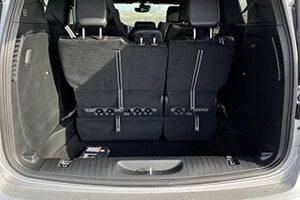
What is Chrysler’s Stow N’ Go Seating?

Chrysler Pacifica Stow N' Go What is Chrysler’s Stow ‘N Go Seating? Chrysler’s Stow ‘N Go seating is a great feature that allows you to completely hide away all rear seats, leaving you with plenty of cargo space in the back of your Chrysler van. Stow ‘N Go seating was introduced in mini-van models in 2005 and continues to improve each year. How to Use Stow ‘N Go Seating Move the front seat forward using a Stow ‘N Go assist button located behind the front seat. Fold up the 2nd row armrests, and open the floor panels located in front the seats, leaving the panels open. Pull the “Stow ’N Go” strap at the bottom of the seats, which fold it forward. From the folded seat position, lead the seat into the opened cargo space and close the floor panels. The 3rd row seating stows in the cargo floor, making the rear cargo area flat and ready for cargo. Visit us in Sunnyside to experience Stow N' Go seating on the Chrysler Pacifica today! Shop New Chrysler Inventory The information provided is for general informational purposes only and does not constitute legal, financial, or professional advice. While we strive to provide accurate and up-to-date information, we make no guarantees regarding the completeness, accuracy, or reliability of the information presented. Any action you take based on the context of this blog is strictly at your own risk. Always consult a qualified professional or specialist for advice specific to your situation. We are not responsible for any losses or damages arising from the use of this blog or its content.

What are the warranties that come with a new Jeep?

New Vehicle Basic Limited Warranty 3 years/36,000 miles This warranty covers parts and labor of any repair need performed due to defective parts or materials, factory production or workmanship. Any warranty repairs are at no cost to you. The warranty begins the date of the vehicle delivery or when the vehicle is first put to used as a “demo” at the dealership. The warranty ends after 3 years or 36,000 miles on the odometer- whichever comes first. There are certain wear and tear components that are only covered for the first year or 12,000 miles on the odometer. These components include: Brakes, Bulbs, Clutch Discs or Modular Clutch Assembly, Wheel Alignment, Wheel Balancing, Windshield & Rear Window, and Wiper Blades. Anti-Corrosion Perforation Limited Warranty 3 years/Unlimited miles | 5 years/Unlimited miles This warranty is split into two different categories: Corrosion on all sheet metal panels and corrosion on outer-body sheet metal panels. The anti-corrosion perforation limited warranty covers parts and labor to replace or repair only panels that get holes or damage from only corrosion and rust. For all sheet metal panels this warranty lasts 3 years with no mileage limit. For outer-body finish-painted sheet metal panels, this lasts 5 years/Unlimited miles. Powertrain Limited Warranty 5 years/60,000 miles The Powertrain Limited Warranty covers many components of your Jeep including the Gas Engine, Transmission (case and internal parts) and Drivetrain (FWD, RWD, AWD, 4WD). This Powertrain warranty is active for 5 years or 60,000 miles, whichever happens first. It does not cover manual transmission clutch parts, vehicle modifications, and more. Federal Emission Warranty 2 years/24,000 miles This warranty covers the parts of the Jeep that are working the emissions system. Most parts are also covered by the 3 year/36,000-mile New Vehicle Basic Limited Warranty. If your Jeep is equipped with one of these, this federal warranty will cover these parts for 8 years or 80,000 miles: • Belt Driven Hybrid Starter Generator • Catalytic Converter • Powertrain Control Module (PCM) • Power Pack Unit – 48 Volts • Transmission Control Module (TCM) This can also cover the cost of repairs or adjustments that are needed due to an emissions test, but only if the vehicle is well-maintained and has failed the test or if a penalty such as a fine or loss of vehicle due to failure of the test.

When and Why Should I Rotate My Tires?

Tire rotations are important to tire health, as this service ensures that they are wearing evenly. Uneven wear can result in a blow out or a sooner-than-expected tire replacement. The drive tires usually wear faster, either the front or the rear wheels, depending on the drivetrain of your vehicle (Rear Wheel Drive or Front Wheel Drive). The drive tires do more work as they receive more power and turn the vehicle, adding weight and friction to different tires. Mopar recommends a tire rotation every 6,000 – 8,000 miles, but it’s always important to check your owner’s manual to see when the ideal mileage interval is for a tire rotation. When getting a tire rotation, the wheels are rotated specifically to match the drive train. Call our experts today to find out if your vehicle is ready for a tire rotation! The information provided is for general informational purposes only and does not constitute legal, financial, or professional advice. While we strive to provide accurate and up-to-date information, we make no guarantees regarding the completeness, accuracy, or reliability of the information presented. Any action you take based on the context of this blog is strictly at your own risk. Always consult a qualified professional or specialist for advice specific to your situation. We are not responsible for any losses or damages arising from the use of this blog or its content.

What does Jeep’s Desert Rated Badge mean?

Recently in 2020, Jeep introduced the Jeep Gladiator Mojave, the first Jeep vehicle to sport the Desert Rated badge. The Desert Rated badge is a sibling of Jeep’s well-known Trail Rated badge, earned through a rigorous course of testing. For a Jeep to become Desert Rated, it must succeed in five different categories: Traction, Ride Control and Stability, Ground Clearance, Maneuverability, and Desert Prowess. Traction: Sand is unpredictable and it can be difficult to determine where the tough areas of the dunes are. This is where Jeep asks, “Why not be able to drive through it all?”. The Jeep is tested to power through loose sand, gravel and dirt. Ride Control and Stability: When riding the dunes, stability is extremely important when turning through the uneven terrain. On the Desert Rated Gladiator Mojave, the upgraded FOX brand shocks were put to the test, absorbing the impact of the rough, desert ride. Ground Clearance: A Desert Rated Jeep must be able to clear those big, tough dunes. It provides the ability to drive over instead of around those obstacles without underbody damage. Desert Rated ground clearance is tested on steep angles and hills to test the optimized suspension. Maneuverability: Gliding through the sand, the snow, whatever the terrain may be, is something a Desert Rated Jeep is tested to be capable of. This test determines how well the Jeep can take on twists and turns while treading through tough terrain. Desert Prowess: Can the Jeep handle the extremes of the desert? A Jeep that succeeds in the Desert Prowess category can handle the extreme heat and withstand the dust of the desert climate. Jeep plans on adding more models to the Desert Rated Jeep family in the near future. These vehicles will be tested on a newly-created Desert Rated proving grounds in Arizona. in the meantime, shop our new Jeep inventory online. The information provided is for general informational purposes only and does not constitute legal, financial, or professional advice. While we strive to provide accurate and up-to-date information, we make no guarantees regarding the completeness, accuracy, or reliability of the information presented. Any action you take based on the context of this blog is strictly at your own risk. Always consult a qualified professional or specialist for advice specific to your situation. We are not responsible for any losses or damages arising from the use of this blog or its content.

What does Jeep’s Trail Rated badge mean?

On many Jeeps you may have heard the term “Trail Rated” or have seen the well-earned Trail Rated 4×4 badge on various Jeep models. Earning the badge requires the Jeep model to succeed in rigorous testing out of five different categories: Traction, Water Fording, Ground Clearance, Articulation, and Maneuverability. Traction: When testing traction, the 4×4 Jeep is taken through tough terrain — including mud, snow, and slippery wet conditions. The goal of the test is to see if the Jeep can ultimately take on a snowy road trip home or an unpredictable off-road adventure, and to ensure a good grip in unpredictable conditions. Water Fording: A Trail Rated Jeep’s electrical connections and openings of the body are sealed, and the air intake is integrated higher up in the vehicle, giving the Jeep a great capability to ford the waters. This test takes the Jeep through high waters and deep puddles to prove its aquatic proficiency. Disclaimer from Jeep: “Do not attempt water-fording unless depth is known to be less than 19-30 inches. Water depth varies depending on model.” Ground Clearance: Trail Rated 4×4 Jeeps are built and tested to withstand driving over obstacles such as large rocks and logs without sustaining any damage to the underbody of the vehicle. The Jeep is driven into extreme off-road conditions, taking on large rocks and hills. Obstacles? A thing of the past. Articulation: Testing the articulation means to evaluate the capability of the Jeep to keep as many tires on the ground as possible, and to determine how flexible the suspension is on extremely rough surfaces. Maneuverability: With enhanced wheelbases and more-than-capable steering, the Trail Rated Jeeps are driven into tough situations of defensive maneuvers and times of tight steering. In any case, it’s important to be able to get out of a sticky circumstance or avoid the unexpected. Places of testing: After the initial assessment at the FCA facility in the potentially harsh cold of Northern Michigan, the Jeep models are then sent to different areas of various climates to perform the ultimate, Trail Rated tests. These areas include Moab, Utah and The Rubicon Trail, California. These tests are backed by the Nevada Automotive Test Center – a big name in military-grade vehicle testing! The information provided is for general informational purposes only and does not constitute legal, financial, or professional advice. While we strive to provide accurate and up-to-date information, we make no guarantees regarding the completeness, accuracy, or reliability of the information presented. Any action you take based on the context of this blog is strictly at your own risk. Always consult a qualified professional or specialist for advice specific to your situation. We are not responsible for any losses or damages arising from the use of this blog or its content.

Contact Us

Fill out this form below and we'll contact you shortly
*Required Fields