



Speck Chrysler Jeep Dodge Ram

Blog / Automotive Lease

Blog

All Automotive Lease Car Tips Automotive Service and Repair Jeep Ram Automotive How-To Guides Chrysler Dodge Auto Parts Automotive Financing Fleet and Commercial Vehicles Holiday Trade-in Value Used Cars, Trucks and SUVs Dealership Blog Local Events

What to Know Before Leasing a Vehicle

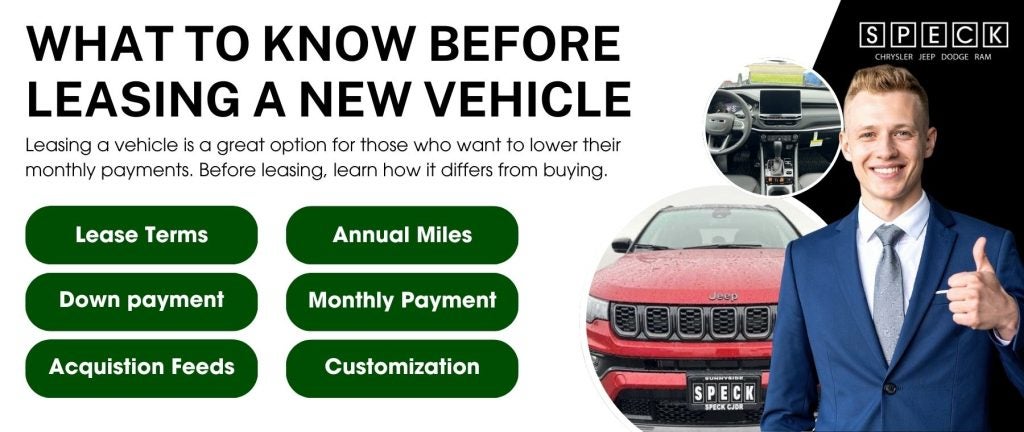
Leasing a vehicle is a great option for those who want lower monthly payments. It also provides the ability to easily switch cars every couple years. Before signing a lease, it's important to understand the key aspects of leasing and how it differs from buying. Key Considerations Before Leasing 1. Lease Terms & Mileage Limits Most leases last 24 to 36 months. Leases typically come with annual mileage limits (10,000-15,000 miles per year). Exceeding the mileage limit can result in extra fees per mile 2. Monthly Payments & Costs Leasing usually has lower monthly payments than financing. Be prepared for down payments, acquisition fees, and, disposition fees. You're responsible for maintenance and excess wear-and-tear charges. 3. End-of-Lease Options Return the vehicle and lease a new one. Purchase the leased vehicle if you want to keep it. Extend your lease if you need more time. 4. Insurance Requirements Leased vehicles often require higher coverage limits. GAP insurance may be required to cover potential depreciation gaps. 5. Customization & Restrictions Modifications to leased vehicles are usually not allowed. You must return the vehicle in good condition to avoid extra fees. Lower Your Payments By Leasing Leasing can be a smart financial choice if you prefer lower payments and driving the latest models. Understanding the lease terms and potential costs will help you make an informed decision. Visit our dealership or shop online to explore leasing options that are right for you! Shop New Inventory Apply for Financing The information provided is for general informational purposes only and does not constitute legal, financial, or professional advice. While we strive to provide accurate and up-to-date information, we make no guarantees regarding the completeness, accuracy, or reliability of the information presented. Any action you take based on the context of this blog is strictly at your own risk. Always consult a qualified professional or specialist for advice specific to your situation. We are not responsible for any losses or damages arising from the use of this blog or its content.
What Happens at the End of a Car Lease

What Happens at the End of a Car Lease? Your Financing Options

Common End-of-Lease Options When your lease is up, you typically have three main choices: Return the Car and Walk Away: If you don’t want to keep the vehicle, you can return it to the dealership. Be sure to account for any excess mileage, wear and tear, or lease-end fees. Buy the Car: Many lease agreements include a buyout option, allowing you to purchase the vehicle for a predetermined amount. Lease or Buy Another Vehicle: You can transition into a new lease or finance a different vehicle, often loyalty incentives from the dealer. Should You Buy Your Leased Vehicle? Buying your leased car can be a smart move under certain circumstances: The Buyout Price Is Less Than Market Value: If the car’s residual value is lower than its current market price, purchasing it could save you money. You Love the Vehicle: If you’ve taken good care of the car and it fits your needs, buying it eliminates the hassle of searching for a new one. Avoid Lease-End fees: Purchasing your vehicle may be a good option if you’re facing high wear-and-tear penalties or excess mileage charges. Lease-End Fees to Watch Out For: Before returning your leased vehicle, review potential charges: Excess Mileage Fees: Leases come with mileage limits, and exceeding them can result in costly per-mile charges. Wear and Tear Charges: Any damage beyond normal use may incur repair costs. Disposition Fees: Some lease agreement include a fee for returning the vehicle, typically covering resale preparation costs. Financing Your Lease Buyout If you decide to purchase your leased vehicle, you’ll need financing unless you plan to pay in cash. Options include: Bank or Credit Union Loans: Comparing rates with outside lenders can help secure the best terms. Personal Savings or Trade-In Value: Using cash or trading in another vehicle can help lower the amount you need to finance. Explore Available Options As your lease term nears its end, explore all available options to determine the best financial move. Whether you return, buy, or lease a new vehicle, understanding the costs and benefits will ensure a smooth transition to your next car. Shop New Inventory Browse New Specials Apply for Financing The information provided is for general informational purposes only and does not constitute legal, financial, or professional advice. While we strive to provide accurate and up-to-date information, we make no guarantees regarding the completeness, accuracy, or reliability of the information presented. Any action you take based on the context of this blog is strictly at your own risk. Always consult a qualified professional or specialist for advice specific to your situation. We are not responsible for any losses or damages arising from the use of this blog or its content.

Contact Us

Fill out this form below and we'll contact you shortly
*Required Fields