




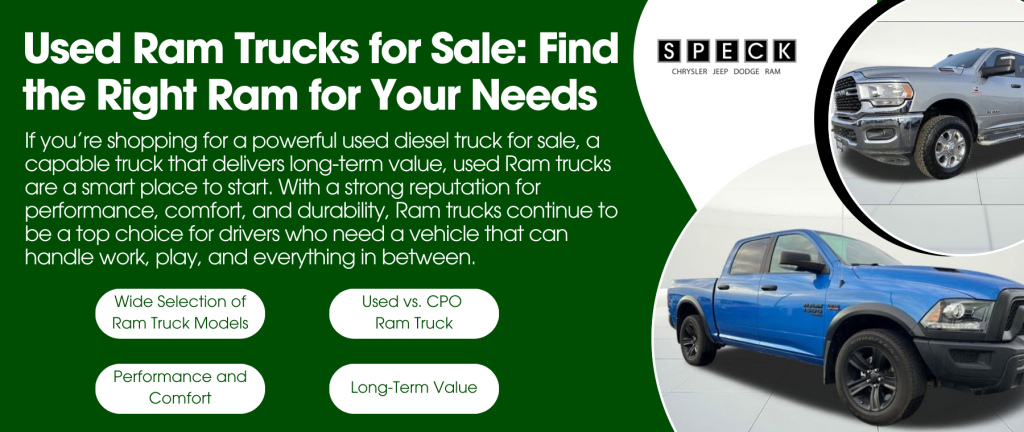
If you’re shopping for a powerful used diesel truck for sale. A capable truck that delivers long-term value? Used Ram trucks are a smart place to start. With a strong reputation for performance, comfort, and durability. Ram trucks continue to be a top choice for drivers who need a vehicle that can handle work, play, and everything in between. Whether you’re looking for a light-duty pickup or a heavy-duty workhorse, there’s a used Ram that fits your lifestyle.
A Wide Selection of Ram Truck Models
Our inventory regularly features a variety of Ram 1500, Ram 2500, and Ram 3500 models. Providing shoppers flexibility based on their needs. The Ram 1500 is a popular choice for everyday driving. It offers a smooth ride, advanced technology, and impressive towing capability. For drivers who need more muscle, the Ram 2500 and 3500 offer heavy-duty performance designed for hauling, towing, and demanding job sites, while still providing modern interior comforts.
Used vs. Certified Pre-Owned Ram Trucks
Shoppers can often choose between standard used Ram trucks and Certified Pre-Owned (CPO) Ram trucks. Used models offer excellent value and a wide range of trims, mileages, and price points. Certified Pre-Owned Ram trucks take things a step further by undergoing a detailed inspection process. It also typically includes added warranty coverage and roadside assistance. This makes CPO options a great fit for buyers who want extra peace of mind with their pre-owned purchase.
Performance, Capability, and Everyday Comfort
Ram trucks are known for blending strength with refinement. Even in used models, you’ll often find features like advanced infotainment systems, spacious crew cabs, and driver-assistance technologies that make daily driving more enjoyable. From towing trailers and hauling equipment to commuting or road trips, Ram trucks are built to handle a wide range of tasks without sacrificing comfort.
Long-Term Value and Reliability
Buying a used Ram truck can be a smart financial decision. Pre-owned trucks typically offer lower upfront costs while still delivering years of reliable performance. With proper maintenance, Ram 1500, 2500, and 3500 models are built to go the distance, making them a solid investment for drivers who want capability without paying new-vehicle prices.
Finding the Right Used Ram Truck
Because inventory is always changing, it’s easy to find a mix of trims, configurations, and price ranges when shopping for used Ram trucks. Whether you’re focused on towing capacity, interior features, or overall value, having multiple options makes it easier to match a truck to your specific needs and budget.
Explore the Used Ram Truck Line-Up
Used Ram trucks offer a powerful combination of capability, comfort, and value that appeals to a wide range of drivers. With options across the Ram 1500, 2500, and 3500 lineup, and the choice between used and Certified Pre-Owned models. Speck is a popular used truck dealer. You can find a truck that fits your lifestyle today and for years to come.
The information provided is for general informational purposes only and does not constitute legal, financial, or professional advice. While we strive to provide accurate and up-to-date information, we make no guarantees regarding the completeness, accuracy, or reliability of the information presented. Any action you take based on the context of this blog is strictly at your own risk. Always consult a qualified professional or specialist for advice specific to your situation. We are not responsible for any losses or damages arising from the use of this blog or its content.

The 2026 Chrysler Pacifica delivers a family-friendly interior that blends comfort, versatility, and advanced technology. Designed to elevate everyday driving and long-distance travel alike, its cabin offers thoughtful features for passengers of all ages and lifestyles. Whether you’re hauling kids, gear, or pets, the Chrysler Pacifica’s inside is built to keep everyone comfortable and connected.
Spacious and Flexible Seating
One of the standout features of the Pacifica’s cabin is its seating flexibility. The minivan typically seats seven to eight passengers, with second-row configurations that include captain’s chairs or a bench seat when available. Chrysler’s signature Stow ’n Go® seating system allows both second and third-row seats to fold flat into the floor, creating a large, flat cargo area without the hassle of removing seats manually. This system enhances versatility for luggage, tools, or larger items.
Premium Comfort and Materials
The 2026 Pacifica offers a range of upholstery options. From durable Caprice leatherette on base trims to luxurious quilted Nappa leather on higher trims like the Pinnacle. Available features such as heated and ventilated front seats, heating for second-row seats, and adjustable captain’s chairs with movable lumbar pillows provide comfort tailored for long drives. Soft-touch materials, ambient lighting, and detailed stitching elevate the cabin’s overall feel.
Technology and Connectivity
Tech highlights begin with the Uconnect® 5 infotainment system displayed on a 10.1-inch touchscreen, offering smartphone integration through Apple CarPlay® and Android Auto™. Optional upgrades include premium audio systems (such as Harman Kardon® with more speakers), built-in navigation, and a Uconnect Theater package, which adds rear-seat entertainment with video screens, Amazon Fire TV integration, and headphone support. Perfect for keeping passengers entertained on long trips.
Family-Friendly Features
The Pacifica cabin includes family-oriented conveniences such as multiple USB ports throughout the vehicle, three-zone automatic climate control, and rear-seat window shades. Available interior cameras like FamCAM™ help keep an eye on rear-seat passengers, while integrated vacuum systems (Stow ’n Vac®) make quick clean-ups a breeze. Sliding power doors and a hands-free liftgate add to the ease of daily use.
Smart Storage and Practical Details
Storage is another strong suit in the Pacifica interior. The minivan offers abundant cubbies, under-floor hidey-holes, cupholders, and well-positioned bins for small items. Higher trims further enhance storage with premium center consoles that provide deep pass-through spaces for larger items like a laptop or bags.
Test Drive a Chrysler Pacifica in Sunnyside, WA
The 2026 Chrysler Pacifica’s interior packs an impressive blend of comfort, versatility, and cutting-edge technology, making it one of the most well-rounded family minivans available. With flexible seating options, premium materials across trim levels, advanced entertainment features, and smart storage, the Pacifica delivers an enjoyable ride for drivers and passengers alike. Come visit Speck Chrysler Jeep Dodge Ram to experience the cabin firsthand.
The information provided is for general informational purposes only and does not constitute legal, financial, or professional advice. While we strive to provide accurate and up-to-date information, we make no guarantees regarding the completeness, accuracy, or reliability of the information presented. Any action you take based on the context of this blog is strictly at your own risk. Always consult a qualified professional or specialist for advice specific to your situation. We are not responsible for any losses or damages arising from the use of this blog or its content.
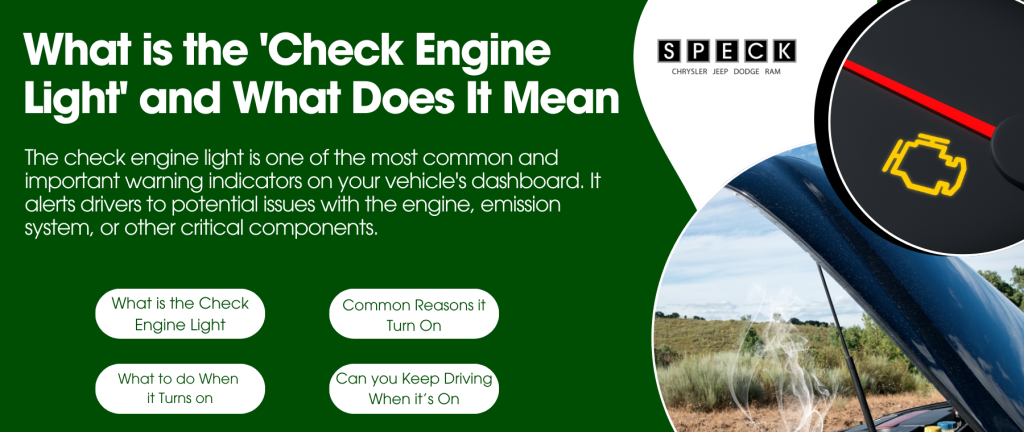
The check engine light (CEL) is one of the most common and important warning indicators on your vehicle’s dashboard. It alerts drivers to potential issues with the engine, emission system, or other critical components. Understanding what this light means and how to respond can help prevent costly repairs and ensure your vehicle runs smoothly.
1. What is the Check Engine Light?
The CEL, also known as te malfunction indicator lamp (MIL), is part of your vehicle’s onboard diagnostic system (OBD-II). When a problem is detected, the light illuminates to notify the driver that something requires attention.
2. Common Reasons the Check Engine Light Turns On
Several issues can trigger the CEL, ranging from minor to severe problems:
- Loose or Faulty Gas Cap: A loose, cracked, or missing gas cap can cause the light to turn on due to fuel vapor escaping.
- Oxygen Sensor Failure: A malfunctioning oxygen sensor affects fuel efficiency and emission.
- Catalytic Converter Issues: If the catalytic converter is failing, it can reduce performance and increase emissions.
- Mass Airflow Sensor (MAF Problems): This sensor controls how much air enters the engine, issues can cause rough idling and poor fuel economy.
- Spark Plug or Ignition Coil Failure: Faulty spark plugs can lead to engine misfires, decreased performance, and higher fuel consumption.
- Battery or Alternator Issues: Electric system problems can sometimes trigger the CEL.
3. What to Do When the Check Engine Light Comes On
If your CEL turns on, follow these steps:
- Check Your Gas Cap: Tighten it and see if the light turns off after a few drives.
- Observe Vehicle Performance: If the car runs normally, the issue may not be urgent, but you should still have it checked.
- Look for Flashing Light: A flashing check engine light indicates a severe issue, like an engine misfire, and requires immediate attention.
- Use an OBD-II Scanner: Many auto parts stores offer free diagnostics to determine the trouble code causing the issue.
- Schedule a Professional Inspection: If the light stays on, take your vehicle to a certified mechanic for a thorough diagnosis.
4. Can You Keep Driving with the Check Engine Light On?
- If the Light is Steady: You can usually continue driving but should schedule a service appointment soon.
- If the Light is Flashing: Stop driving immediately to prevent further damage and have the vehicle inspected as soon as possible.
Schedule Your Service Appointment in Sunnyside
The CEL is your vehicle’s way of telling you something needs attention. While some issues are minor, others can lead to significant repairs if ignored. If your engine light comes on, take the time to diagnose the problem or seek professional help to keep your car running safely and efficiently.
The information provided is for general informational purposes only and does not constitute legal, financial, or professional advice. While we strive to provide accurate and up-to-date information, we make no guarantees regarding the completeness, accuracy, or reliability of the information presented. Any action you take based on the context of this blog is strictly at your own risk. Always consult a qualified professional or specialist for advice specific to your situation. We are not responsible for any losses or damages arising from the use of this blog or its content.
What to Know Before Leasing a Vehicle
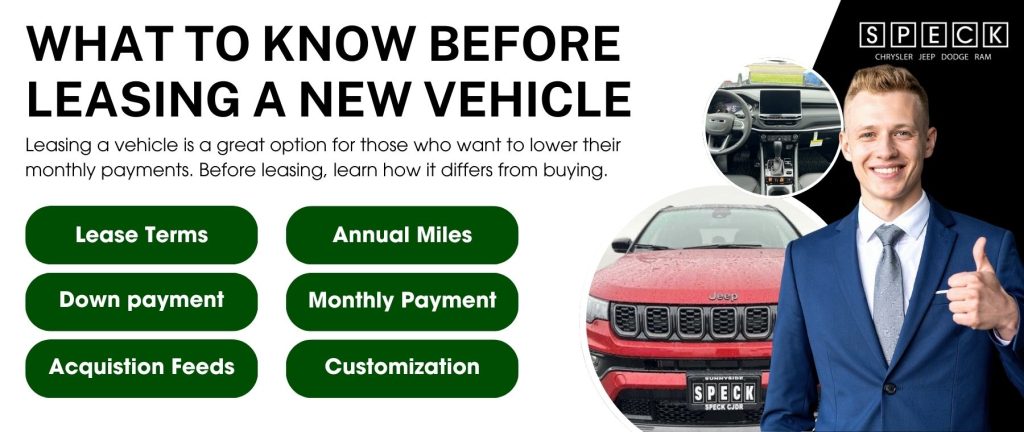
Leasing a vehicle is a great option for those who want lower monthly payments. It also provides the ability to easily switch cars every couple years. Before signing a lease, it’s important to understand the key aspects of leasing and how it differs from buying.
Key Considerations Before Leasing
1. Lease Terms & Mileage Limits
- Most leases last 24 to 36 months.
- Leases typically come with annual mileage limits (10,000-15,000 miles per year).
- Exceeding the mileage limit can result in extra fees per mile
2. Monthly Payments & Costs
- Leasing usually has lower monthly payments than financing.
- Be prepared for down payments, acquisition fees, and, disposition fees.
- You’re responsible for maintenance and excess wear-and-tear charges.
3. End-of-Lease Options
- Return the vehicle and lease a new one.
- Purchase the leased vehicle if you want to keep it.
- Extend your lease if you need more time.
4. Insurance Requirements
- Leased vehicles often require higher coverage limits.
- GAP insurance may be required to cover potential depreciation gaps.
5. Customization & Restrictions
- Modifications to leased vehicles are usually not allowed.
- You must return the vehicle in good condition to avoid extra fees.
Lower Your Payments By Leasing
Leasing can be a smart financial choice if you prefer lower payments and driving the latest models. Understanding the lease terms and potential costs will help you make an informed decision. Visit our dealership or shop online to explore leasing options that are right for you!
The information provided is for general informational purposes only and does not constitute legal, financial, or professional advice. While we strive to provide accurate and up-to-date information, we make no guarantees regarding the completeness, accuracy, or reliability of the information presented. Any action you take based on the context of this blog is strictly at your own risk. Always consult a qualified professional or specialist for advice specific to your situation. We are not responsible for any losses or damages arising from the use of this blog or its content.

Common Reasons for Bluetooth Connection Issues
Before troubleshooting, it’s important to understand some common reasons why Bluetooth might not be working:
- Compatibility Issues: Not all smartphones are fully compatible with all infotainment systems.
- Software Glitches: Outdated firmware on your phone or vehicle system can cause connectivity problems.
- Interference: Other wireless devices or networks may interfere with the connection.
- Paired Device Limits: The Dodge’s infotainment system may have reached the maximum number of paired devices.
Steps to Troubleshoot Bluetooth Connection Issues
- Ensure Bluetooth is Enabled: Check that Bluetooth is turned on for both your Dodge’s infotainment system and your smartphone.
- Delete and Re-Pair the Device: Remove your phone from the vehicle’s paired devices list and reconnect it.
- Restart Both Devices: Turn off and restart your phone and your Dodge’s infotainment system to refresh the connection.
- Check for Software Updates: Make sure your phone’s operating system and your Dodge’s infotainment software are up to date.
- Clear Paired Devices: If your vehicle has too many paired devices, remove some old connections and try again.
- Ensure Proper Pairing Process: Follow the steps outlined in your owner’s manual for pairing your phone correctly.
- Try Another Device: Test the connection with a different phone to determine if the issue is specific to your device.
When to Seek Professional Help
If you’ve tried these steps and are still having trouble, consider:
- Contacting Dodge Support: Your vehicle’s manufacturer may have specific troubleshooting tips.
- Visiting a Dealership: A technician can check for software updates and diagnose any hardware-related issues.
- Consulting Your Owner’s Manual: Some connectivity issues can be resolved by following Dodge’s official guidelines.
Bluetooth Connectivity Help
Bluetooth connectivity issues can be frustrating, but with some simple troubleshooting steps, you can often resolve the problem quickly. If issues persist, don’t hesitate to schedule a service appointment at Speck Chrysler Dodge Jeep Ram.
The information provided is for general informational purposes only and does not constitute legal, financial, or professional advice. While we strive to provide accurate and up-to-date information, we make no guarantees regarding the completeness, accuracy, or reliability of the information presented. Any action you take based on the context of this blog is strictly at your own risk. Always consult a qualified professional or specialist for advice specific to your situation. We are not responsible for any losses or damages arising from the use of this blog or its content.

Common End-of-Lease Options
When your lease is up, you typically have three main choices:
- Return the Car and Walk Away: If you don’t want to keep the vehicle, you can return it to the dealership. Be sure to account for any excess mileage, wear and tear, or lease-end fees.
- Buy the Car: Many lease agreements include a buyout option, allowing you to purchase the vehicle for a predetermined amount.
- Lease or Buy Another Vehicle: You can transition into a new lease or finance a different vehicle, often loyalty incentives from the dealer.
Should You Buy Your Leased Vehicle?
Buying your leased car can be a smart move under certain circumstances:
- The Buyout Price Is Less Than Market Value: If the car’s residual value is lower than its current market price, purchasing it could save you money.
- You Love the Vehicle: If you’ve taken good care of the car and it fits your needs, buying it eliminates the hassle of searching for a new one.
- Avoid Lease-End fees: Purchasing your vehicle may be a good option if you’re facing high wear-and-tear penalties or excess mileage charges.
Lease-End Fees to Watch Out For:
Before returning your leased vehicle, review potential charges:
- Excess Mileage Fees: Leases come with mileage limits, and exceeding them can result in costly per-mile charges.
- Wear and Tear Charges: Any damage beyond normal use may incur repair costs.
- Disposition Fees: Some lease agreement include a fee for returning the vehicle, typically covering resale preparation costs.
Financing Your Lease Buyout
If you decide to purchase your leased vehicle, you’ll need financing unless you plan to pay in cash. Options include:
- Bank or Credit Union Loans: Comparing rates with outside lenders can help secure the best terms.
- Personal Savings or Trade-In Value: Using cash or trading in another vehicle can help lower the amount you need to finance.
Explore Available Options
As your lease term nears its end, explore all available options to determine the best financial move. Whether you return, buy, or lease a new vehicle, understanding the costs and benefits will ensure a smooth transition to your next car.
The information provided is for general informational purposes only and does not constitute legal, financial, or professional advice. While we strive to provide accurate and up-to-date information, we make no guarantees regarding the completeness, accuracy, or reliability of the information presented. Any action you take based on the context of this blog is strictly at your own risk. Always consult a qualified professional or specialist for advice specific to your situation. We are not responsible for any losses or damages arising from the use of this blog or its content.
How Much Should You Put Down on a Car Loan

Buying a car is significant financial commitment, and determining how much to put down on a car loan is an important decision. A down payment can affect your monthly payments, interest rates, and overall loan terms. Here’s what you need to know about making a down payment on a car loan.
Why Is a Down Payment Important?
A down payment serves several key purposes:
- Reduces Your Loan Amount: The more you put down, the less you have to borrow.
- Lowers Monthly Payments: A smaller loan means lower monthly payments.
- May Help Secure Better Interest Rates: Lenders may offer better terms to borrowers who provide a substantial down payment.
- Prevents Negative Equity: A good down payment helps offset depreciation, reducing the risk of owing more than the car’s value.
How Much Should You Put Down?
The ideal down payment depends on several factors, including your credit score, loan terms, and the cost of the vehicle. Here are general guidelines:
- New Cars: Aim for 20% of the car’s purchase price to cover depreciation and secure favorable loan terms.
- Used Cars: A 10% down payment is typically recommended since used cars depreciate at a slower rate.
- Bad Credit Buyers: Those with lower credit scores may need a higher down payment, around 10-20%, to improve loan approval chances.
What If You Can’t Afford a Large Down Payment?
If a 20% down payment isn’t feasible, there are alternatives:
- Trade-In Your Vehicle: Using a trade-in can reduce the amount you need to put down.
- Look for Manufacturer or Dealer Incentives: Some dealerships offer special promotions that reduce down payment requirements.
- Save Up Before Purchasing: If possible, delay your purchase to build savings for a larger down payment.
- Consider Gap Insurance: If your down payment is small, gap insurance can protect against depreciation losses in case of an accident.
Should You Put More Than the Minimum?
If you have the financial flexibility, a larger down payment can be beneficial:
- Less Interest Paid Over Time: A smaller loan balance accrues less interest.
- Shorter Loan Terms: You may be able to afford a shorter loan, reducing the total cost of borrowing.
- Improved Loan Approval Chances: A larger down payment can make financing easier, especially for those with lower credit scores.
Conclusion
While the recommended down payment for a car loan varies, aiming for 10-20% can help reduce financial strain and secure better loan terms. Consider your budget, credit score, and available incentives to determine the right amount for your situation.
The information provided is for general informational purposes only and does not constitute legal, financial, or professional advice. While we strive to provide accurate and up-to-date information, we make no guarantees regarding the completeness, accuracy, or reliability of the information presented. Any action you take based on the context of this blog is strictly at your own risk. Always consult a qualified professional or specialist for advice specific to your situation. We are not responsible for any losses or damages arising from the use of this blog or its content.
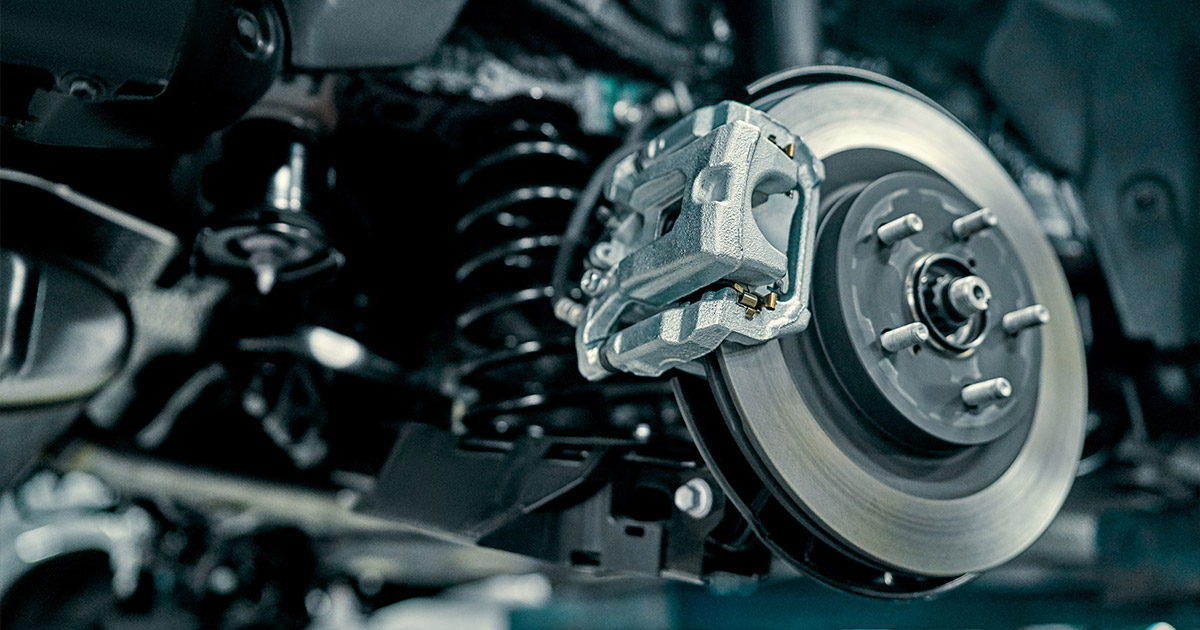
Experiencing vibrations when you press on your brakes can be unsettling and a sign of potential issues with your vehicle’s braking system. Identifying the cause early can help prevent more significant problems and ensure your safety on the road. Here are some common reasons why your vehicle may be vibrating when you brake and what you can do about it.
Warped Brake Rotors
Brake rotors can become warped over time due to excessive heat and wear. When this happens, the brake pads cannot make smooth contact with your rotor surface, causing vibrations when braking. You might notice the shaking is more pronounced when slowing down from high speeds. Resurfacing or replacing the rotors can help resolve this issue.
Worn or Uneven Brake Pads
Brake pads wear down over time, and if they become uneven, they may cause vibrations when pressed against the rotors. Using low-quality brake pads or not replacing them regularly can also contribute to the problem. Inspecting and replacing brake pads when they show signs of wear can help maintain smooth braking performance.
Stuck Brake Calipers
Brake calipers apply pressure to the brake pads, allowing them to grip the rotors and slow down your vehicle. If a caliper becomes stuck or fails to release properly, it can cause uneven braking and vibrations. Yu may also notice a burning smell or a pulling sensation when braking. Addressing caliper issues promptly can prevent further damage to the braking system.
Suspension or Steering Problems
Sometimes, the issue isn’t directly related to the brakes. Worn suspension components, such as control arms or bushings, can create instability that manifest as vibrations when braking. Similarly, steering system issues, such as worn tie rods or ball joints, can contribute to the problem. A thorough inspection of these components can help diagnose and fix the issue.
Wheel Alignment and Tire Issues
Misaligned wheels or unbalanced tires can also cause vibrations, especially when braking. If you notice uneven tire wear or your vehicle pulling to one side, it may be time to check your wheel alignment and balance. Keeping your tires properly inflated and rotated can also help prevent vibrations.
What to Do Next
If you experience vibrations when braking, it’s essential to address the issue as soon as possible. Here’s what you can do:
- Schedule a brake inspection with a certified mechanic.
- Check for uneven brake pad wear and replace them if necessary.
- Have your brake rotors inspected and resurfaced or replaced if needed.
- Ensure your wheel alignment and tire balance are correct.
- Inspect suspension and steering components for any signs of wear or damage.
Diagnose Car Brake Issues
Vibrations when braking can be cause by various factors, from warped rotors to suspension issues. Identifying the root cause early can help maintain your vehicle’s performance and ensure a safe driving experience. If you’re unsure about the cause, let a certified technician inspect diagnose your brake troubles.
The information provided is for general informational purposes only and does not constitute legal, financial, or professional advice. While we strive to provide accurate and up-to-date information, we make no guarantees regarding the completeness, accuracy, or reliability of the information presented. Any action you take based on the context of this blog is strictly at your own risk. Always consult a qualified professional or specialist for advice specific to your situation. We are not responsible for any losses or damages arising from the use of this blog or its content.

Regular vehicle maintenance is crucial for keeping your car running efficiently and ensuring its longevity. By staying on top of routine service, you can prevent costly repairs and keep your vehicle in top condition for years to come. Here are the key ways regular maintenance can extend the life of your car.
1. Engine Health & Performance
- Routine oil changes keep the engine lubricated and prevent premature wear.
- Replacing air filters ensure proper airflow and fuel efficiency.
- Checking and replacing spark plugs as needed keeps the engine running smoothly.
2. Tire Care & Longevity
- Regular tire rotations promote even tread wear, extending tire life.
- Proper inflation improves fuel efficiency and handling.
- Alignments prevent uneven wear and enhanced overall vehicle stability.
3. Brake System Maintenance
- Replacing brake pads before they wear down prevents damage to rotors.
- Checking brake fluid ensures proper braking performance.
- Addressing unusual noises or vibrations prevents costly repairs.
4. Fluid Checks & Replacements
- Transmission fluid, coolant, and power steering fluid should be checked and changed periodically.
- Keeping fluids at proper levels prevents overheating and component failure.
- Regular flushes remove contaminants that can cause wear.
5. Battery & Electrical System Care
- Cleaning battery terminals prevents corrosion and ensures a strong start.
- Testing the battery regularly avoids unexpected failures.
- Checking the alternator and starter helps prevent electrical issues.
6. Preventing Rust & Corrosion
- Washing and waxing your car regularly protects the paint and body from rust.
- Keeping the undercarriage clean prevents salt buildup from causing corrosion.
- Addressing small paint chips early prevents further damage.
Regular Car Maintenance Pays Off
By committing to regular vehicle maintenance, you can avoid costly breakdowns, improve safety, and maximize your car’s lifespan. A well-maintained vehicle not only runs better but also retains its value over time. Whether it’s oil changes, tire care, or fluid checks, routine service is a small investment that pays off in the long run.
The information provided is for general informational purposes only and does not constitute legal, financial, or professional advice. While we strive to provide accurate and up-to-date information, we make no guarantees regarding the completeness, accuracy, or reliability of the information presented. Any action you take based on the context of this blog is strictly at your own risk. Always consult a qualified professional or specialist for advice specific to your situation. We are not responsible for any losses or damages arising from the use of this blog or its content.

Trading in your vehicle can be a smart way to offset the cost of a new car, but getting the most out of your trade requires preparation and strategy. The good news? You don’t need to resort to underhanded tactics to boost your trade-in value. With a few simple hacks, you can ensure you’re getting a fair deal while maintaining a positive relationship with your dealership.
Why Preparation Matters
Dealerships want to make the trade-in process as easy as possible, but being prepared ensures you won’t leave money on the table. A little effort upfront can translate into hundreds (or even thousands) of dollars in extra value.
Hack #1: Clean Your Car Inside and Out
First impressions matter, even for vehicles.
- Why It Works: A clean car signals to the dealership that you’ve taken good care of your vehicle. It also makes it easier for appraisers to evaluate the car’s true condition.
- How to Do It: Wash and wax the exterior, vacuum the interior, and wipe down surfaces. Pay attention to small details like removing personal items and cleaning windows.
Hack #2: Gather Maintenance Records
Showcasing a well-maintained vehicle can significantly boost its perceived value.
- Why It Works: Maintenance records Demonstrate that you’ve been proactive about caring for your car, reducing potential risks for the dealership.
- How to Do It: Compile receipts or records for oil changes, tire rotations, and major repairs. If you’ve had your vehicle serviced at a dealership, they may already have records on file.
Hack #3: Do Your Homework on Your Car’s Value
Knowledge is power when it comes to negotiating.
- Why It Works: Understanding your car’s market value gives you a realistic expectation of what your trade-in is worth.
- How to Do It: Use online tools like Kelly Blue Book (KBB) or Edmunds to check your car’s trade-in value. Be honest about your car’s condition when using these tools for the most accurate estimate.

Hack #4: Fix Small Issues
Minor repairs can go a long way in increasing your car’s value.
- Why It Works: Addressing small, inexpensive issues, like replacing a burnt-out headlight or filling low tire pressure, makes your car more appealing.
- How to Do It: Perform basic maintenance before the trade-in, such as topping off fluids or replacing wiper blades. Avoid costly repairs that won’t significantly impact the trade-in value.
Hack #5: Be Honest About Your Vehicle’s Condition
Transparency builds trust and leads to smoother negotiations.
- Why It Works: Dealerships perform thorough inspections, so hiding issues will only create complications later.
- How to Do It: Be upfront about any damage or mechanical problems. Honesty helps the dealership assess your vehicle accurately and avoid surprises.
Trading in your vehicle doesn’t have to be stressful or overwhelming. By following these simple hacks, cleaning your car, gathering records, researching values, and being honest, you can ensure a fair deal without resorting to shortcuts. Remember, dealerships value transparency and preparation, and your effort will show during the trade-in process.
The information provided is for general informational purposes only and does not constitute legal, financial, or professional advice. While we strive to provide accurate and up-to-date information, we make no guarantees regarding the completeness, accuracy, or reliability of the information presented. Any action you take based on the context of this blog is strictly at your own risk. Always consult a qualified professional or specialist for advice specific to your situation. We are not responsible for any losses or damages arising from the use of this blog or its content.
Connect with us
