



What Jeep is Right For my Family
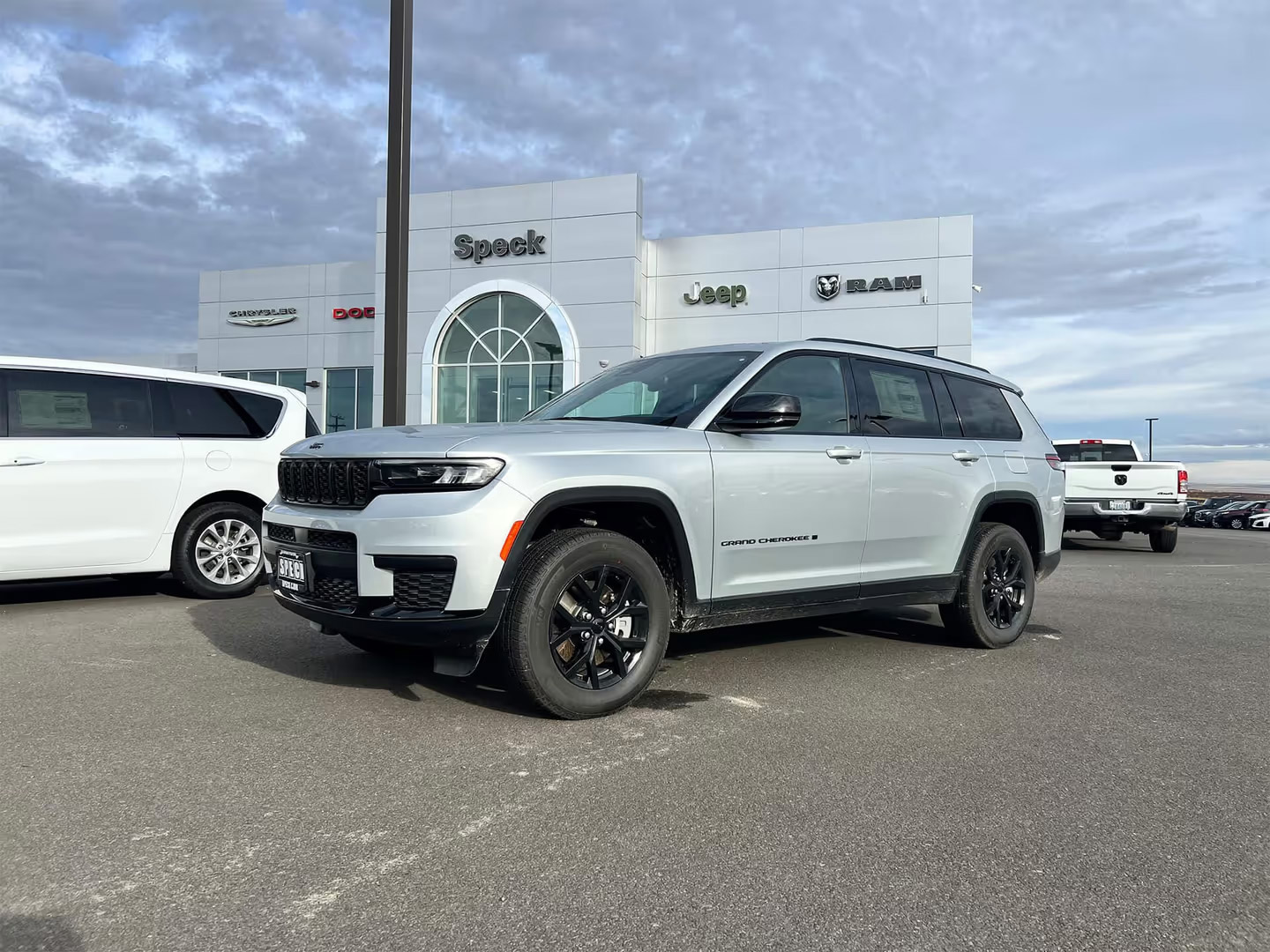
Jeeps are renowned for their ruggedness, reliability, and off-road capabilities. But they’re not just about adventure, they also excel in providing comfort, safety, and practicality for families. Here’s why a Jeep could be perfect for your family:
- Safety Features: Modern Jeep models are equipped with advanced safety technologies, including adaptive cruise control, blind-spot monitoring, and lane-keeping assist.
- Space for Everyone: From spacious interiors to ample cargo room, Jeeps are designed to accommodate families of all sizes
- Versatility: Whether you’re navigating city streets, embarking on a road trip, or exploring rugged terrain, Jeeps offer the adaptability you need.
Jeep Grand Cherokee: The All-Rounder
The Jeep Grand Cherokee is a favorite among families for its perfect balance of luxury, space, and capability.
- Spacious seating for five and ample cargo space.
- Available three-row Grand Cherokee L model for larger families.
- Premium interior finishes for a touch of luxury.
- Advance safety features and high crash-test ratings.
Best For: Families who need a versatile SUV for both city driving and outdoor adventures.
Jeep Wrangler: The Adventurer
The iconic Jeep Wrangler is built for those who love outdoor adventures and rugged terrains.
- Removable doors and roof for an open-air experience.
- Trail-rated capabilities for off-road enthusiast.
- Improved comfort and tech features in newer models.
Best For: Active families who enjoy off-road adventures and exploring the great outdoors.
Jeep Compass: The Compact Option
If you’re looking for something smaller but still family-friendly, the Jeep Compass is a great choice. Below are just a few reasons the Compass is great for a daily commuter:
- Compact size for easy city driving and parking.
- Fuel-efficient without compromising on capability.
- Comfortable seating and user-friendly infotainment system.
Best For: Small families or those prioritizing city-friendly convenience.

Jeep Cherokee: The The Mid-Sized Star
The Jeep Cherokee combines comfort, style, and off-road ability in a mid-sized package.
- Flexible interior with folding seats for extra cargo space.
- Smooth ride quality and a range of engine options.
- Competitive towing capacity for family road trips.
Best For: Families who want a balance of size, comfort, and off-road capability.
Jeep Wagoneer: The Premium Family SUV
For families looking for the ultimate in space and luxury, the Jeep Wagoneer stands out.
- Seats up to eight passengers with three rows.
- High-end finishes and advanced tech features.
- Exceptional towing capacity for boats, campers, or trailers.
Best For: Large families or those seeking a luxury SUV with top-tier features.
How to Choose the Right Jeep for Your Family
When deciding on the best Jeep for your family, consider these factors:
- Family Size: Larger families may prefer the Grand Cherokee L or Wagoneer for their extra seating and cargo space.
- Lifestyle Needs: If you love off-road adventures, the Wrangler or Cherokee might be a better fit. For city drivers, the Compass offers compact and efficient options.
- Budget: Jeep models come in a range of price points, so you’re sure to find one that fits your budget.
- Features: Prioritize safety, technology, and comfort features that align with your family’s needs.
Which Jeep Is Best for Your Family?
The best Jeep for your family depends on your unique needs, lifestyle, and preferences. Take your time to explore the options, schedule test drives, and consider what features matter most to your family. With a Jeep, you’re not just getting a vehicle, you’re getting a companion for life’s journeys, big and small.
The information provided is for general informational purposes only and does not constitute legal, financial, or professional advice. While we strive to provide accurate and up-to-date information, we make no guarantees regarding the completeness, accuracy, or reliability of the information presented. Any action you take based on the context of this blog is strictly at your own risk. Always consult a qualified professional or specialist for advice specific to your situation. We are not responsible for any losses or damages arising from the use of this blog or its content.
What is the (Red) Edition on Jeep and Ram?
Have you seen the (Red) logo on select Jeep and Ram models and wondered what it is? Every (Red) Edition Jeep purchased will help support Jeeps commitment to help fight health emergencies. Jeep, Ram and Fiat have committed to donating a minimum of $4 million to the Global Fund by 2023.
(Red) History
Founded by Bono and Bobby Shriver to enlist companies in the fight against AIDS, (Red) is also helping with the COVID pandemic. Many iconic brands have teamed up with (Red) to help strengthen health systems around the world.
Find Your New Jeep or Ram in Sunnyside, WA
Now that you know about (Red), it’s time to find your new Jeep or Ram. Browse our new inventory and help support an amazing cause!
The information provided is for general informational purposes only and does not constitute legal, financial, or professional advice. While we strive to provide accurate and up-to-date information, we make no guarantees regarding the completeness, accuracy, or reliability of the information presented. Any action you take based on the context of this blog is strictly at your own risk. Always consult a qualified professional or specialist for advice specific to your situation. We are not responsible for any losses or damages arising from the use of this blog or its content.
How To Clean Your Engine
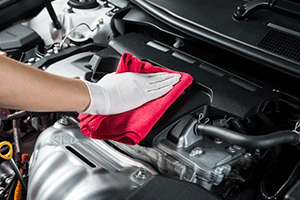
We all love having a clean car, but the engine is not something we typically clean during normal car washes. Engine cleaning takes time and special care in order to do the job properly without damaging any components.
In preparation, always make sure that the weather is on your side while the engine dries after cleaning. Just like oil inspections, the vehicle’s engine needs to be cooled off because working with a hot engine is dangerous and can lead to injury.
It’s also important to have a good cleaner/engine degreaser that will get the job done. Brands such as Chevron, Restore, Griot’s, Simple Green (natural degreaser) and more all make these products. Be sure to follow the directions on the bottle carefully.
- Start by covering all electrical parts, electronics and wires with plastic to avoid getting these components wet. You can also remove the battery or battery cables, removing the negative cable first to avoid a short in the circuit.
- Use a brush to wipe any debris or dirt throughout your engine.
- Spray the engine with degreaser thoroughly and with caution to the electrical parts, and scrub it in with a stiff, synthetic-bristle brush to remove any caked on engine grease. Let it soak for at least 5 minutes.
- Rinse your engine with a regular, low pressure hose. If you have a nozzle available, set it on a small stream setting. You want to take all precautions to avoid the electrical components! Be sure to also rinse the exterior of your vehicle in case any degreasing product made its way on your paint.
- Dry your engine with an absorbent shop towel or compressed air for all those small areas. Take the plastic off and make sure no electrical components are dry. You can then replace the battery or negative cable. Let your engine area air dry the rest of the way before running your vehicle.
Time for a detail? Schedule your detail appointment easily online.
The information provided is for general informational purposes only and does not constitute legal, financial, or professional advice. While we strive to provide accurate and up-to-date information, we make no guarantees regarding the completeness, accuracy, or reliability of the information presented. Any action you take based on the context of this blog is strictly at your own risk. Always consult a qualified professional or specialist for advice specific to your situation. We are not responsible for any losses or damages arising from the use of this blog or its content.
Why We Love the Chrysler 300
Not only does it radiate style, but proves its power.
The new Chrysler 300 is a recognizable vehicle, with a sporty and classic shape.This stylish vehicle comes in 4 available trim levels including the Chrysler 300 Touring, Chrysler 300 Touring L, Chrysler 300S V6, Chrysler 300S V8. The Touring and Touring L come equipped with a 3.6L V6 engine that gets up to 292 HP at 6350 RPM. The 300S V6 carries a 3.6L V6 engine that gets up to 300 HP at 6,350 RPM, and the 5.7L V8 engine gets up to 363 HP at 5,200 RPM.
The Chrysler 300 has a great history.
The Chrysler 300 began production in 1955, becoming an introduction to the muscle car. Throughout the decade, Chrysler continued production on the 300 Letter Series until 1965, ending with the Chrysler 300L. In 1998, Chrysler created the 300M to pick up where the Letter Series left off, which stayed in production until 2004. 2005’s Chrysler saw a redesign with the iconic body style we know today. Since then, the Chrysler 300 has been updated and produced with great power options and advanced, modern technology.
Advanced technology brings your drive to life.
The new technology in the 2021 Chrysler 300 includes standard Apple CarPlay and Android Auto, available nine-speaker Alpine Audio System with subwoofer, available 4G LTE Wifi Hotspot and much more!
The information provided is for general informational purposes only and does not constitute legal, financial, or professional advice. While we strive to provide accurate and up-to-date information, we make no guarantees regarding the completeness, accuracy, or reliability of the information presented. Any action you take based on the context of this blog is strictly at your own risk. Always consult a qualified professional or specialist for advice specific to your situation. We are not responsible for any losses or damages arising from the use of this blog or its content.
Jeep Wrangler Limited Edition Trims
Jeep Wrangler Willys and Willys Sport:
The Jeep Wrangler Willys and Willys Sport Limited Edition models are ready to take on off-roading with ease. These trim levels feature a full gloss black grille and 17″ wheels embossed with a gray Willys silhouette, 32-inch Mud-Terrain tires, high-performing shock absorbers, and rock rails for added protection.
Jeep Wrangler High Altitude:
The Jeep Wrangler High Altitude Limited Edition is equipped with standard features that include an 8.4″ UConnect touch display with integrated Navigation system, Blind Spot Monitor and Rear Cross Path Detection, leather-seating with embroidered High Altitude design, and more. Other available luxury features include:
- Freedom Top
- 20″ gloss black aluminum wheels
- all-season tires
Jeep Wrangler Islander
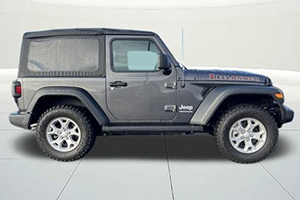
The Jeep Wrangler Islander Limited Edition is a surf-inspired trim level, designed to take on the beach terrain. This Wrangler is equipped with high-performance shock absorbers and heavy duty rock rails for added protection against the loose terrain. Other features include:
- soft top roof
- available white Freedom Top
- Surf Blue interior accent stitching along with the Islander logo
- 9 different exterior colors available
Jeep Wrangler 80th Anniversary Edition:
The Jeep Wrangler 80th Anniversary Limited Edition honors the history of the Jeep brand. The 80th Anniversary trim level features exclusive anniversary badging, commemorative logo seat stitching, and am 8.4″ UConnect touch display.
Jeep Wrangler Freedom Edition:
The Jeep Wrangler Freedom Edition is an ode to our Military, with exclusive Military-inspired decals. With every Jeep Freedom purchase a donation is made to the USO, an organization dedicated to providing support, care and entertainment to U.S. troops. Other popular features on the Freedom Edition include:
- 17” painted wheels
- steel front bumper with black tow hooks
- premium LED lights
- 12 available exterior colors.
Jeep Wrangler Sport Altitude/ Jeep Wrangler Sahara Altitude:
The Jeep Wrangler Sport Altitude and Sahara Altitude feature 18” gloss black wheels, Class II receiver hitches and come standard with Jeep’s Freedom Top. Features include:
- 3-piece Freedom Top comes in Black
- cloth is standard on the Sport Altitude
- leather is standard on the Sahara Altitude
To learn more about the Limited Edition Jeep Wrangler trim levels, talk to the experts here at Speck Chrysler Jeep Dodge Ram of Sunnyside!
The information provided is for general informational purposes only and does not constitute legal, financial, or professional advice. While we strive to provide accurate and up-to-date information, we make no guarantees regarding the completeness, accuracy, or reliability of the information presented. Any action you take based on the context of this blog is strictly at your own risk. Always consult a qualified professional or specialist for advice specific to your situation. We are not responsible for any losses or damages arising from the use of this blog or its content.
Summer Car Care Tips

Make sure your coolant system is working properly.
The cooling system keeps your engine from overheating, which can be an occurrence more likely to happen in the heat of the Summer season. Check hoses for any leaks or cracks, and ensure your coolant is clean and topped off. If your vehicle may need it, a coolant flush is a good idea to schedule.
Keep your fluids up.
The fluids inside your vehicle are key to keep everything working in proper order. Fluids work hard to keep your engine systems cool in the extreme heat. Your fluids include brake fluid, power steering fluid, coolant, transmission fluid, and the most regularly checked — motor oil. Oil should be changed regularly in order for a smooth-running engine.
Inspect your brakes.
When braking, especially from high speeds, the friction produces a lot of heat. The extra heat from the Summer can create even more wear on your brakes. It is a good idea to get your brakes inspected to ensure that your brakes are ready to handle the Summer roads.
Check your tire pressure regularly.
Whether it is drastic heat or drastic cold, the outside temperature can have an effect on your tire pressure. Heat can cause your tire pressure to increase, and a sudden drop of temperature can do just the opposite to your tires. It’s a good idea to give a good glance over your tires before you head out on your way, and be sure to get a professional inspection regularly to make sure your tires are healthy.
Schedule your summer car care maintenance online or call 509-402-2588 today.
The information provided is for general informational purposes only and does not constitute legal, financial, or professional advice. While we strive to provide accurate and up-to-date information, we make no guarantees regarding the completeness, accuracy, or reliability of the information presented. Any action you take based on the context of this blog is strictly at your own risk. Always consult a qualified professional or specialist for advice specific to your situation. We are not responsible for any losses or damages arising from the use of this blog or its content.
Why Is a Ram Great for Your Business?
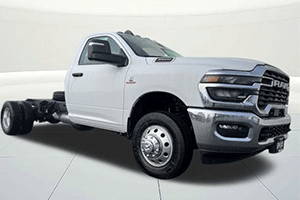
Ram Commercial Vehicles: Versatile Upfits to Fit Your Needs
Ram commercial vehicles include the Ram ProMaster, Ram ProMaster City, Ram Chassis Cab, Ram 2500 and 3500, and Ram 1500. These Ram vehicles have available upfits from Ram that can make the job easier with Construction Upfits, Telecom Upfits, HVAC Upfits, Plumbing Upfits and more.
Ram Trucks: Towing Capability
Ram trucks are built to get the job done! Check out towing capacities below:
- Ram Chassis Cab: can tow up to 20,490lbs. when properly equipped, and with the dual rear wheel options, it can tow up to 25,650 pounds.
- Ram 2500: can tow between roughly 16,000-20,000 pounds depending on the truck’s gas/diesel engine and equipment.
- Ram 3500: can tow between roughly between 18,000 and just over 37,000 pounds with the 6.7L High-Output Cummins Turbo Diesel engine.
Towing capacities can be different with each vehicle. Please refer to the owner’s manual for towing with your specific Ram commercial vehicle!
Ram Vans: ProMaster has Plenty of Space
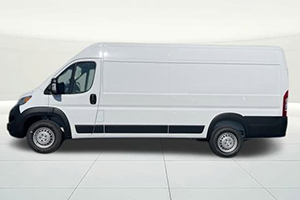
The Ram ProMaster City is perfect for efficient commuting and taking your small business on-the-go. It has a maximum cargo volume of 131.7 cubic feet. The cargo area has a length of 7’3”, a height of 4’4”, and width of 5’0”. The Ram ProMaster van is larger, and can take on bigger projects with many upfitting options. The ProMaster van has a maximum cargo volume of 259 cubic feet. It has a cargo length of 8’, height of 5’6”, and width of 6’3”.
Ready to get a new Ram for your business? Learn more about our Fleet and Commercial Sales today.
The information provided is for general informational purposes only and does not constitute legal, financial, or professional advice. While we strive to provide accurate and up-to-date information, we make no guarantees regarding the completeness, accuracy, or reliability of the information presented. Any action you take based on the context of this blog is strictly at your own risk. Always consult a qualified professional or specialist for advice specific to your situation. We are not responsible for any losses or damages arising from the use of this blog or its content.
New 2021 Ram Truck Warranties
The new 2021 Ram truck gas engine has a variety of warranties, such as:
- Basic Limited Warranty for 3 years/36,000 miles (whichever comes first).
- Anti-Corrosion Perforation Limited Warranty for all panels 3 years, unlimited miles, and outer panels are covered for 5 years, unlimited miles.
- Powertrain Limited Warranty for 5 years/60,000 miles (whichever comes first)
Ram Basic Limited Warranty Coverage
The Basic Warranty covers the replacement or repair of any defective parts or systems at no cost to you, excluding tires and any headphones. Repairs are only covered under warranty if the issue was from factory workmanship or defective stock parts. Items with 12 month or 12,000 miles coverage, including:
- brakes
- bulbs
- wheel alignment and balancing
- wiper blades
- windshield and more
Ram Anti-Corrosion Perforation Limited Warranty Coverage
The Anti-Corrosion Warranty coverage includes the replacement or repair of damage or holes in the truck’s sheet panels due to rust or natural corrosion. Corrosion from vehicle alteration, salt or sand, ocean spray, extensive chemical transport, and other third-party causes are not covered.
Ram Powertrain Limited Warranty Coverage
The Powertrain Limited Warranty covers your vehicle’s powertrain, including the engine and internal working parts, All-Wheel-Drive/Rear-Wheel Drive/Front-Wheel Drive systems, transmission and more.
Be sure to view your Ram’s owner manual for full details and limitations of your warranty.
The information provided is for general informational purposes only and does not constitute legal, financial, or professional advice. While we strive to provide accurate and up-to-date information, we make no guarantees regarding the completeness, accuracy, or reliability of the information presented. Any action you take based on the context of this blog is strictly at your own risk. Always consult a qualified professional or specialist for advice specific to your situation. We are not responsible for any losses or damages arising from the use of this blog or its content.
Can the Chrysler Pacifica Minivan Tow?
Can the Chrysler Pacifica minivan tow? The answer is yes! When your Chrysler Pacifica is equipped with the Trailer Tow Group, it comes with trailer-tow four- and seven-pin wiring harness, Class II 2-in. hitch receiver, Trailer-sway Damping, heavy-duty radiator and 220-amp alternator.
2021 Chrysler Pacifica Towing Capability
The Gross Vehicle Weight Rating (GVWR) determines how much your Pacifica can hold inside, passengers and all.
The GVWR of the Chrysler Pacifica Touring Front-Wheel-Drive and Chrysler Pacifica Touring L Front-Wheel-Drive is 6,055lbs.
The GVWR of the Chrysler Pacifica Touring All-Wheel-Drive, Chrysler Pacifica Touring L All-Wheel-Drive, Pacifica Limited AWD and Pinnacle AWD have a GVWR of 6,300 lbs.
The Chrysler Pacifica’s spacious cabin and family-friendly features accompany the versatility of available all-wheel-drive and great tow capabilities. Order your Pacifica with Speck Chrysler Jeep Dodge Ram of Sunnyside, WA. Give us a call at 509-402-2705 to get your Pacifica!
The information provided is for general informational purposes only and does not constitute legal, financial, or professional advice. While we strive to provide accurate and up-to-date information, we make no guarantees regarding the completeness, accuracy, or reliability of the information presented. Any action you take based on the context of this blog is strictly at your own risk. Always consult a qualified professional or specialist for advice specific to your situation. We are not responsible for any losses or damages arising from the use of this blog or its content.
What Are the Ram Truck Cab Options?
Learn about available Ram truck cab options and find the right size to fit your driving needs.
Regular Cab: Seats Up to 3
The regular cab is the smallest of the cab sizes, providing seating for up to three passengers in one row with a door on each side.
Quad Cab: Seats Up to 6
The quad cab seats up to six passengers. Its configuration includes a rear bench seat. On the 2021 Ram 1500, the Quad Cab provides 35.6 inches of rear leg room. The Quad Cab is like an extended cab, but with an assurance of four doors.
Crew Cab: More Room for Passengers
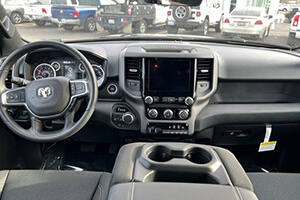
The crew cab seats up to six passengers with plenty of rear leg room measuring at 45.2 inches. Many buyers love the Crew Cab as it provides plenty of room for the family and doubles as a workhorse to get the job done.
Mega Cab: Ultimate Passenger Space
The Ram Truck’s Mega Cab provides the ultimate passenger experience with plenty of room for everyone, as well as an additional space behind the rear seats for cargo. The Mega Cab is found on the Heavy Duty 2021 Ram 2500 & 3500 truck models and seats up to six passengers. The rear leg room on the Mega Cab is 43.1 inches.
The information provided is for general informational purposes only and does not constitute legal, financial, or professional advice. While we strive to provide accurate and up-to-date information, we make no guarantees regarding the completeness, accuracy, or reliability of the information presented. Any action you take based on the context of this blog is strictly at your own risk. Always consult a qualified professional or specialist for advice specific to your situation. We are not responsible for any losses or damages arising from the use of this blog or its content.
Connect with us
