



Speck Chrysler Jeep Dodge Ram

Blog / Automotive Service and Repair

Blog

All Automotive Service and Repair Car Tips Jeep Ram Automotive How-To Guides Chrysler Dodge Auto Parts Automotive Financing Automotive Lease Fleet and Commercial Vehicles Holiday Trade-in Value Used Cars, Trucks and SUVs Dealership Blog Local Events
jeep service recall check

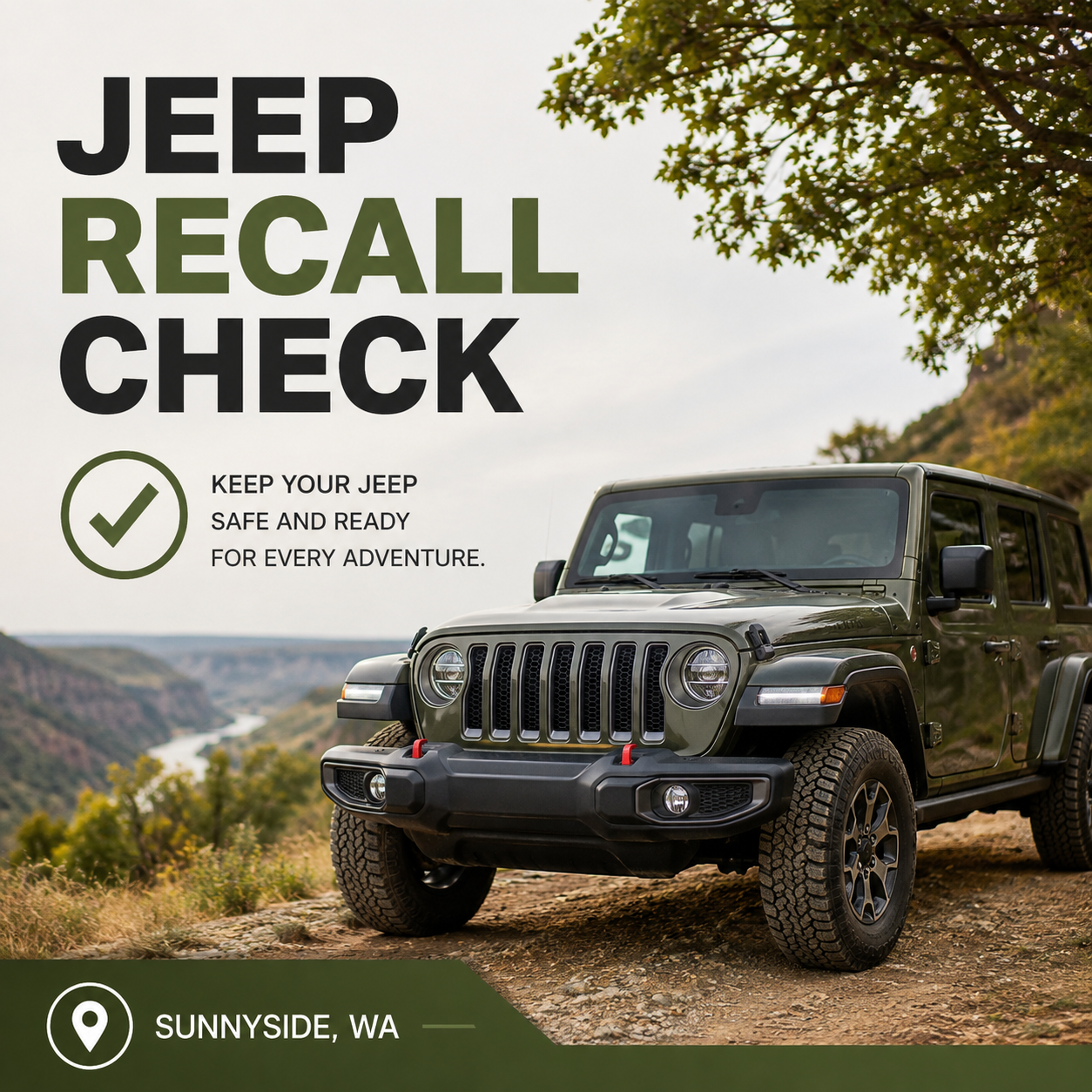
Jeep Recall Check

Owning a Jeep comes with a lot of pride. However, it also comes with the responsibility of staying on top of important safety updates. A Jeep recall can affect your vehicle's safety, performance, and reliability. Checking for open recalls is fast, free, and easy. If you're looking for a Jeep recall check in Sunnyside, WA, your local Speck CDJR service team is here to help. Here's everything you need to know about Jeep recalls and how your local Jeep dealer in Sunnyside, WA can help. What Is a Vehicle Recall? Simply put, a manufacturer triggers a recall the moment they discover a safety defect in a vehicle. The National Highway Traffic Safety Administration oversees all vehicle recalls in the United States. Fortunately, Jeep picks up the entire bill for every recall repair. You pay absolutely nothing out of pocket. That means your Jeep recall repair is completely free. Simply, bring your vehicle to an authorized Jeep dealer and our team will take care of the rest. Common recall areas include: Brakes and brake components Airbags and supplemental restraint systems Steering and suspension components Electrical systems and software updates Engine and fuel system components Why Jeep Recalls Matter A Jeep recall is not something to ignore or put off. Open recalls represent real safety concerns identified by engineers and safety regulators. Many drivers don't realize their vehicle has an open recall. Recall notices can get lost, go to old addresses, or simply be overlooked. For that reason, checking for open recalls regularly is so important. How to Check for Open Jeep Recalls Check by VIN at NHTSA.gov Go to nhtsa.gov and enter your Jeep's 17-digit Vehicle Identification Number. Your VIN can be found on the driver's side dashboard or door jamb sticker. The NHTSA database will show every open recall on your specific vehicle. Best of all, it is completely free and takes less than two minutes. Check at Mopar.com Enter your VIN at Mopar.com to see any open recalls specific to your Jeep. As a bonus, the site will also show you authorized dealers near you where the recall can be completed. Visit Your Jeep Dealer in Sunnyside, WA The easiest option is to visit Speck CDJR in Sunnyside. Our service team can pull up your vehicle's full recall history in just a few minutes. We will let you know exactly what open recalls exist and schedule the repair right away. Recall repairs are always completed at no charge to you. What Is a Recall Safety Check? A recall safety check is a quick inspection to identify any open recalls on your vehicle. More importantly, it focuses on known safety issues identified by the manufacturer or NHTSA. Our service team at Speck CDJR performs recall safety checks quickly and efficiently. We recommend having your Jeep checked for open recalls at every service visit. Which Jeep Models Have Had Recalls? Recalls can affect any vehicle. Some of the most commonly recalled Jeep models include: Jeep Wrangler: Fuel systems, electrical components, and software updates Jeep Grand Cherokee: Airbags, braking systems, and electrical components Jeep Cherokee: Software, steering, and powertrain components Jeep Compass: Electrical systems and software updates Jeep Gladiator: Safety systems and electrical components Schedule Your Recall Repair Today Scheduling your recall repair at Speck CDJR is easy: Online: Visit our website and click "Schedule Service" By Phone: Call our service department directly Walk-In: Stop by during service hours for a same-day recall check Our certified Jeep technicians will take care of your recall repair quickly, professionally, and at absolutely no cost to you. Don't put off an open recall. Schedule your recall safety check at your local Jeep dealer in Sunnyside, WA today. Check for Recalls The information provided is for general informational purposes only and does not constitute legal, financial, or professional advice. While we strive to provide accurate and up-to-date information, we make no guarantees regarding the completeness, accuracy, or reliability of the information presented. Any action you take based on the context of this blog is strictly at your own risk. Always consult a qualified professional or specialist for advice specific to your situation. We are not responsible for any losses or damages arising from the use of this blog or its content.
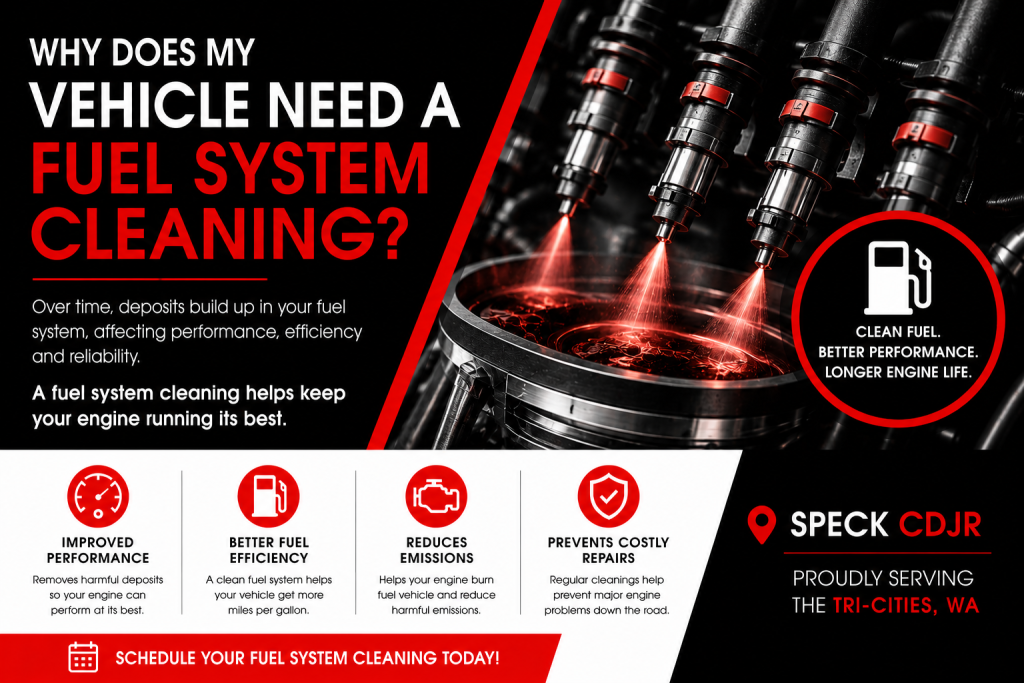
Why Does My Vehicle Need a Fuel System Cleaning?

If you've ever been told your vehicle needs a fuel system cleaning and wondered whether it's really necessary — you're not alone. Here's a straightforward explanation of what it is, why it matters, and how it benefits your Jeep, Ram, or any other vehicle you drive. What Is a Fuel System Cleaning? A fuel system cleaning removes built-up carbon deposits, varnish, and contaminants from the key components of your fuel delivery system. Over time these deposits build up inside your fuel injectors, throttle body, intake valves, and combustion chamber — quietly robbing your engine of performance and efficiency. A thorough fuel system cleaning covers: Fuel Injectors: Restores proper fuel spray patterns Throttle Body: Removes carbon buildup that restricts airflow Intake Valves & Ports: Clears deposits that disrupt the air-fuel mixture Combustion Chamber: Removes buildup that causes knocking and misfires Why Does My Vehicle Need One? Every time your engine runs, small amounts of carbon and varnish are left behind by the combustion process. Over time these deposits accumulate and start affecting how your vehicle drives. Here's what happens: Reduced Fuel Economy Clogged injectors deliver uneven fuel spray — meaning your engine burns more fuel to produce the same power. A clean fuel system restores proper delivery and can improve your miles per gallon. Loss of Power & Acceleration Deposits on intake valves restrict airflow and disrupt the air-fuel mixture. The result is sluggish acceleration and hesitation — especially noticeable when merging on the highway or towing. Rough Idle & Engine Misfires Partially clogged injectors cause inconsistent fuel delivery — leading to a rough idle, engine misfires, and sometimes a check engine light. Hard Starting Deposits in the fuel system can make your engine harder to start — especially in cold Eastern Washington winters or after the vehicle has sat for an extended period. Signs It's Time for a Fuel System Cleaning Watch for these warning signs: 📉 Noticeable drop in fuel economy 🐢 Sluggish or hesitant acceleration 💨 Rough idle or engine misfires 🔑 Hard starting — especially in cold weather ⚠️ Check engine light related to fuel or misfires Most service professionals recommend a fuel system cleaning every 30,000 to 60,000 miles. Local driving conditions — short trips, heavy towing, and older vehicles — can accelerate deposit buildup here in the Yakima Valley and Tri-Cities area. Jeep Service & Ram Service — We Know Your Vehicle Whether you drive a Jeep Wrangler, Grand Cherokee, or Gladiator — or a Ram 1500, 2500, or 3500 — our factory-trained technicians know your vehicle's fuel system inside and out. We use professional-grade cleaning equipment and manufacturer-approved agents — not off-the-shelf additives you pour into the gas tank. Check Our Service Specials Before your next visit, check our current service specials online. We regularly feature fuel system cleaning as part of broader maintenance packages — making it easier and more affordable to stay on top of this important service. Combining it with your oil change or multi-point inspection is a smart, cost-effective approach. Schedule Your Service at Speck CDJR Our service team at Speck CDJR in Sunnyside is ready to help — whether it's a standalone fuel system cleaning, part of a service special, or combined with your next Jeep service or Ram service appointment. Schedule online or stop by today. Schedule Service The information provided is for general informational purposes only and does not constitute legal, financial, or professional advice. While we strive to provide accurate and up-to-date information, we make no guarantees regarding the completeness, accuracy, or reliability of the information presented. Any action you take based on the context of this blog is strictly at your own risk. Always consult a qualified professional or specialist for advice specific to your situation. We are not responsible for any losses or damages arising from the use of this blog or its content.
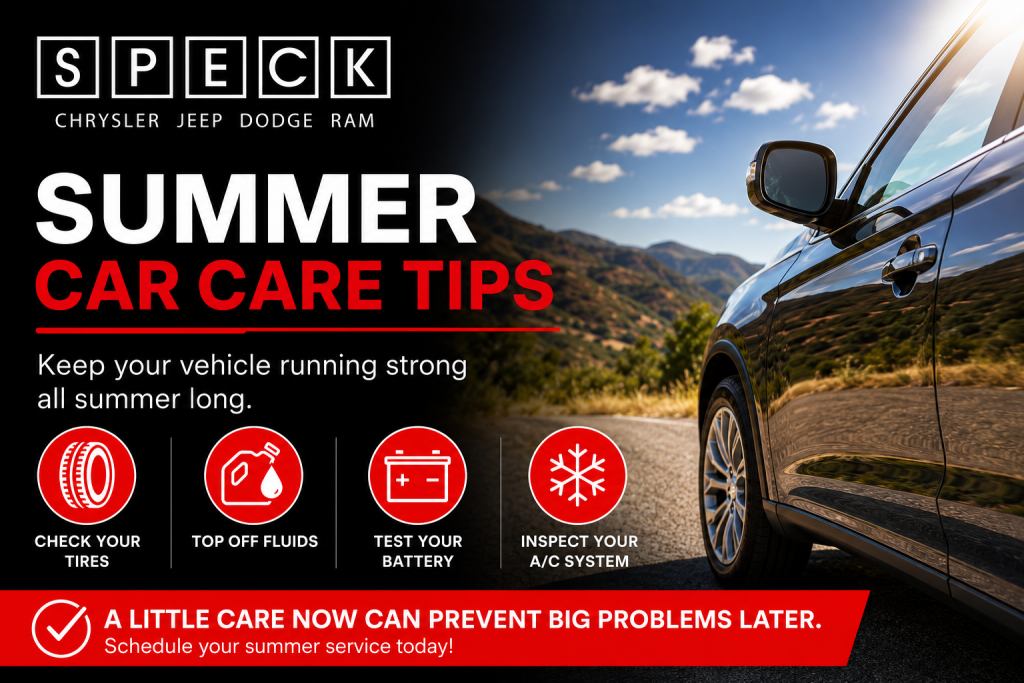
summer car care tips from speck cdjr

Summer Car Care Tips for Washington Drivers

Summer in Eastern Washington is no joke. With temperatures regularly hitting the 90s and 100s across the Yakima Valley and Tri-Cities, your vehicle works harder than it does any other time of year. The good news is that a little preventive maintenance goes a long way — and the team at Speck CDJR is here to help make sure your car, truck, or SUV is ready for everything summer throws at it. Here are the most important things to check before the heat peaks. Top Summer Car Care Tips Check Your Coolant & Cooling System: Your cooling system is your engine's first line of defense against summer heat. Low or old coolant can lead to overheating — one of the most common and costly summer breakdowns. Have your coolant level and condition checked, and inspect hoses and belts for cracks or wear while you're at it. Get an Oil Change: Motor oil breaks down faster in extreme heat, losing its ability to properly lubricate your engine. If you're due for an oil change — or close to it — don't put it off heading into summer. Fresh oil keeps your engine running cooler and more efficiently on long hot drives. Test Your Battery: Most people associate dead batteries with winter, but summer heat is actually harder on batteries than cold weather. High temperatures accelerate the chemical breakdown inside a battery and can cause it to fail without warning. If your battery is more than 3 years old, have it tested before the heat sets in. Service Your A/C System: A struggling A/C isn't just uncomfortable — it can signal a refrigerant leak or a failing compressor. If your air isn't blowing as cold as it used to, or if it takes a while to cool down the cabin, have your A/C inspected and recharged before the peak of summer. Yakima Valley heat is no time to discover your A/C is out. Technician checking brakes on a Jeep Top Off All Fluids: Summer heat affects more than just your coolant. Check and top off windshield washer fluid, brake fluid, power steering fluid, and transmission fluid. Keeping all fluids at proper levels ensures every system operates as it should during the hottest months. Inspect Your Tires: Heat causes tire pressure to rise, which increases the risk of a blowout — especially on long highway drives. Check your tire pressure when tires are cold, inspect tread depth, and look for any sidewall cracking or bulging. Don't forget to check your spare too. Check Your Brakes: If you're planning any summer road trips through mountain passes or along hilly terrain, your brakes deserve a look before you go. Worn brake pads or low brake fluid can put you in a dangerous situation on a long downhill stretch. Our service team can inspect brake pad thickness and overall brake system health quickly. Replace Wiper Blades: Summer storms in Eastern Washington can pop up fast. Worn wiper blades streak and skip, making it hard to see clearly when you need to most. Wiper blades are inexpensive and quick to replace — an easy win for summer safety. A Few Extra Summer Tips Park in the shade when possible. A shaded spot reduces interior temps significantly and protects your dashboard and upholstery from UV damage over time. Use a sunshade. A windshield sunshade can drop interior temps by 15–20°F and keep your steering wheel from becoming untouchable. Keep an emergency kit in your vehicle. Water, a first aid kit, jumper cables, and a phone charger are summer road trip essentials, especially on rural Eastern Washington roads. Never leave pets or kids in the car. Temperatures inside a parked car can exceed 140°F on hot days. Not even a few minutes is safe when it's this hot outside. Ready to get your vehicle summer-ready? The service team at Speck CDJR in Sunnyside is here to help. From oil changes and A/C service to brake inspections and tire checks, we've got everything you need to stay safe and comfortable all summer long. Schedule your summer service appointment online or stop by — we'll get you in and out and back on the road. Schedule Appointment Service Specials The information provided is for general informational purposes only and does not constitute legal, financial, or professional advice. While we strive to provide accurate and up-to-date information, we make no guarantees regarding the completeness, accuracy, or reliability of the information presented. Any action you take based on the context of this blog is strictly at your own risk. Always consult a qualified professional or specialist for advice specific to your situation. We are not responsible for any losses or damages arising from the use of this blog or its content.
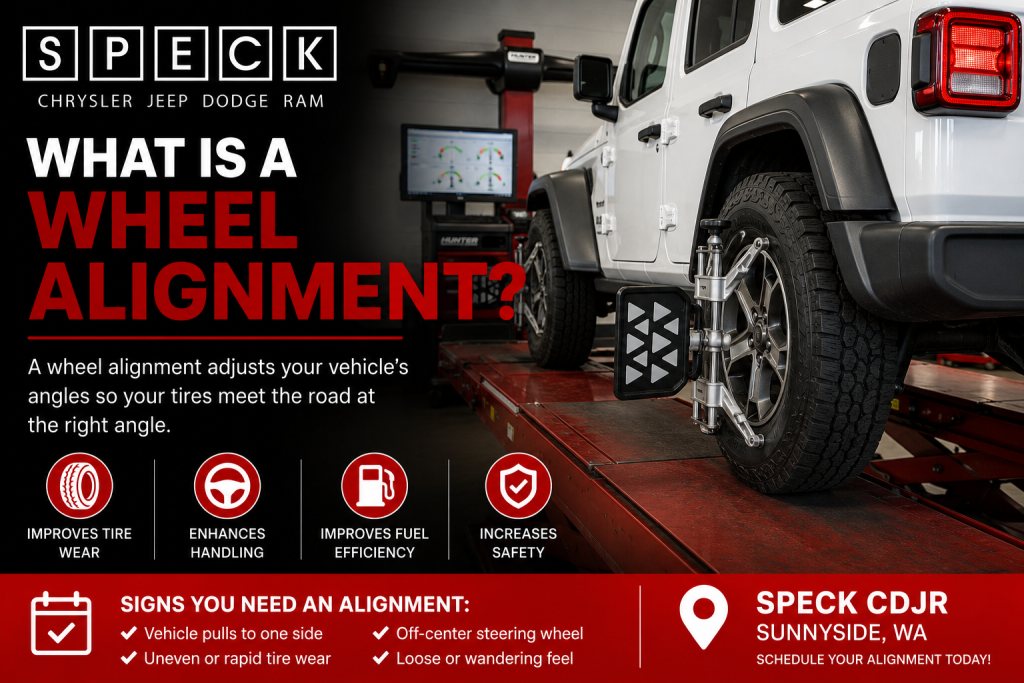
What is a Wheel Alignment

If you've ever noticed your vehicle pulling to one side or your steering wheel sitting crooked, you may be dealing with an alignment issue. A wheel alignment is one of the most important and often overlooked services for your vehicle. At Speck Chrysler Jeep Dodge Ram, our service team is here to keep your vehicle driving straight and performing its best. What Does a Wheel Alignment Do? A wheel alignment adjusts the angles of your tires so they make proper contact with the road. Over time, potholes, curbs, and general wear can knock your wheels out of their correct position. When that happens, your vehicle doesn't drive the way it should. An alignment brings everything back into spec, ensuring your tires wear evenly and your vehicle handles the way it was designed to. Signs You May Need an Alignment There are several telltale signs that your alignment may be off. Your vehicle may pull to the left or right when you're driving straight. Your steering wheel may appear off-center even when driving on a straight road. You might also notice uneven or rapid tire wear, or a vibration in the steering wheel. If any of these sound familiar, it's a good idea to have your alignment checked as soon as possible. How Often Should You Get an Alignment? Most manufacturers recommend having your alignment checked once a year or every 12,000 miles. You should also have it checked any time you hit a significant pothole, curb, or are involved in a minor collision. Getting new tires is another great time to have your alignment inspected. Staying on top of this service helps extend the life of your tires and improves your fuel efficiency. Make your Wheel Alignment Appointment Today Keeping your vehicle properly aligned protects your tires, improves handling, and saves you money in the long run. Don't wait until the problem gets worse. Schedule Service with our team today or browse our Service Specials to see if there's a deal on your next alignment. We're here to help keep your vehicle performing at its best. Schedule Service The information provided is for general informational purposes only and does not constitute legal, financial, or professional advice. While we strive to provide accurate and up-to-date information, we make no guarantees regarding the completeness, accuracy, or reliability of the information presented. Any action you take based on the context of this blog is strictly at your own risk. Always consult a qualified professional or specialist for advice specific to your situation. We are not responsible for any losses or damages arising from the use of this blog or its content.
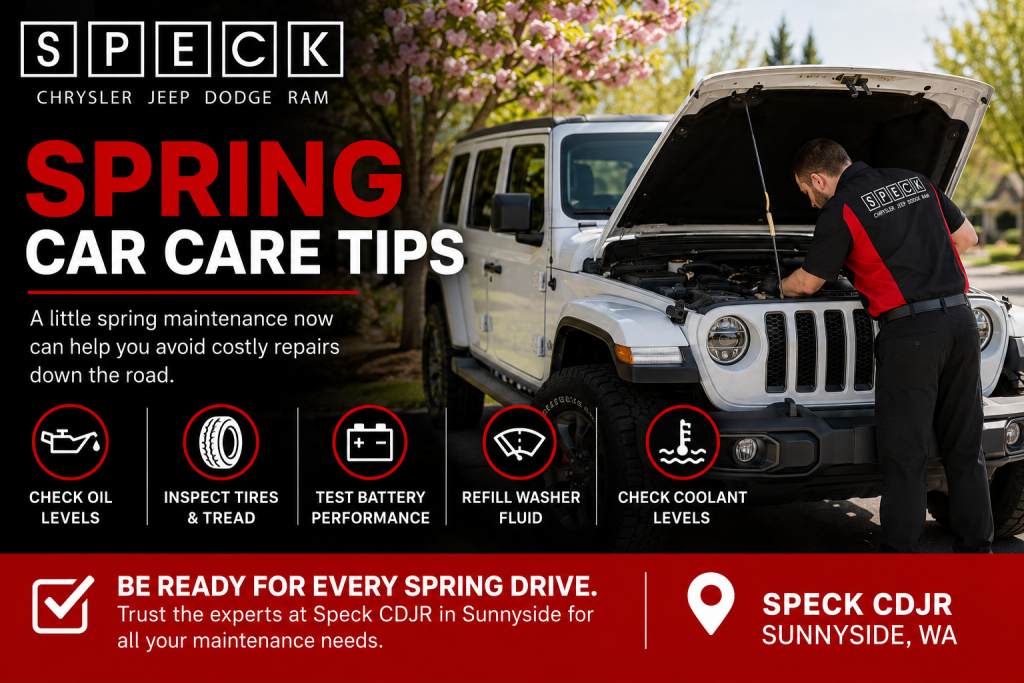
CDJR Spring Car Care Tips for Tri Cities, WA Drivers

Just like winterizing your vehicle, spring is the perfect time to give your ride a little extra TLC! Changing temperatures and spring showers can affect your vehicle more than you think. Our service team at Speck Chrysler Jeep Dodge Ram of Sunnyside is here to get you spring ready and safe for the road ahead! Tires and Brakes: When winter ends, make sure your to align your tires and full of tread, ready to go wherever spring takes you!  Winter roads can cause uneven tire wear and alignment issues that you may not even notice. Don't forget your brakes either — cold temperatures and wet roads can really take a toll on your braking system. Fluids and Exterior: When winter makes its leave for the year, take your car to the car wash to make sure none of the road salt or winter residue is left — it protects your paint and underbody from rust! While you are at it, check all of your fluids and make sure everything is full and fresh for the season ahead. Don't forget your windshield wipers either — winter weather can wear them down fast, leaving you with poor visibility during spring showers! Car Battery: Cold winter temperatures can be extremely tough on your vehicle's battery, draining its power faster than you may realize! Spring is the perfect time to have your battery tested to make sure it is still holding a strong charge. The last thing you want is to be left with a dead battery when the warmer months are has just began! Schedule Service The information provided is for general informational purposes only and does not constitute legal, financial, or professional advice. While we strive to provide accurate and up-to-date information, we make no guarantees regarding the completeness, accuracy, or reliability of the information presented. Any action you take based on the context of this blog is strictly at your own risk. Always consult a qualified professional or specialist for advice specific to your situation. We are not responsible for any losses or damages arising from the use of this blog or its content.
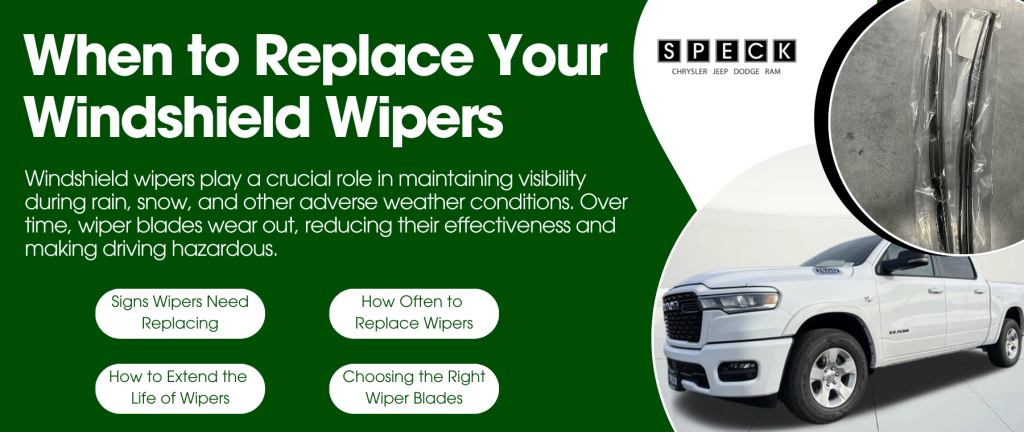
Informative graphic showing when you should replace your windshield wipers

When to Replace Your Windshield Wipers

Windshield wipers play a crucial role in maintaining visibility during rain, snow, and other adverse weather conditions. Over time, wiper blades wear out, reducing their effectiveness and making driving hazardous. Knowing when to replace your windshield wipers ensures optimal performance and safety on the road. 1. Signs That Your Windshield Wipers Need Replacing If you notice any of the following signs, it's time to replace your wipers: Streaking or Smearing: If your wipers leave streaks on the windshield, they may be worn out or have dirt buildup. Skipping or Chattering: Wipers that bounce or skip across the glass indicate hardened rubber or an uneven edge Squeaking Noises: A loud, high-pitched squeak often means the rubber is dry and no longer making proper contact with the glass. Cracked or Torn Rubber: Inspect the blades for visible cracks or splits, which reduces their effectiveness. Reduced Visibility in Rain or Snow: If your wipers struggle to clear the windshield properly, replacing them can improve your visibility and safety. 2. How Often Should You Replace Windshield Wipers? Most experts recommend replacing windshield wipers every 6 to 12 months, but factors like climate and usage may affect their lifespan. Consider replacing them sooner if you: Frequently drive in extreme weather conditions (heat, cold, rain, or snow). Notice a significant drop in performance. See visible wear or damage on the blades. 3. How to Extend the Life of Your Windshield Wipers To maximize the lifespan of your wipers, follow these maintenance tips: Clean Your Windshield Regularly: Dirt and debris can cause excessive wear on the rubber blades. Wipe Down the Blades: Use a damp cloth or wiper cleaner to remove buildup and keep the rubber flexible. Lift Wipers During Freezing Weather: Prevent ice buildup that can crack or tear the rubber. Use the Right Washer Fluid: Avoid harsh chemicals that may degrade the rubber over time. Replace Wipers in Pairs: Ensure even performance by changing both wipers at the same time. 4. Choosing the Right Wiper Blades When selecting new wipers, consider the following options: Conventional Blades: Standard, budget-friendly option found on most vehicles. Beam Blades: More durable, better at handling extreme weather, and offer a sleeker design. Hybrid Blades: Combine durability and aerodynamic efficiency for improved performance. Check your vehicle's owner's manual for the correct size and type of wipers before purchasing replacements. Windshield Wiper Info Replace Your Windshield Wipers Today Windshield wipers are essential for clear visibility and safe driving. Don't wait until a storm hits, inspect and replace your wipers as needed to stay safe on the road. Contact the Speck Chrysler Jeep Dodge Ram service department and talk to our trained professionals. Schedule Service Appointment The information provided is for general informational purposes only and does not constitute legal, financial, or professional advice. While we strive to provide accurate and up-to-date information, we make no guarantees regarding the completeness, accuracy, or reliability of the information presented. Any action you take based on the context of this blog is strictly at your own risk. Always consult a qualified professional or specialist for advice specific to your situation. We are not responsible for any losses or damages arising from the use of this blog or its content.
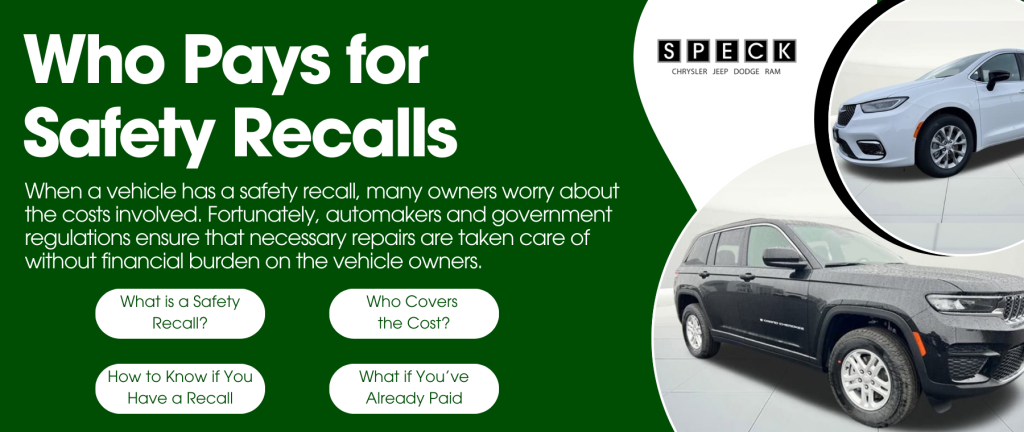
Informative graphic answering who pays for safety recalls

Who Pays for Safety Recalls?

When a vehicle has a safety recall, many owners worry about the costs involved. Fortunately, automakers and government regulations ensure that necessary repairs are taken care of at no cost to you. Here's how it works: What Is a Safety Recall? A safety recall is issued when a vehicle manufacturer or the National Highway Traffic Safety Administration (NHTSA) identifies a defect that could impact safety. Who Covers the Cost of Repair? The manufacturer pays for safety recall repairs. How to Check for a Recall: Check the manufacturer's website for recall notices. Watch for recall notices via mail or email. Check the NHTSA website. Check Safety Recalls Who Can Repair a Safety Recall? Only manufacturer service centers can handle all recall repairs. Schedule Service Appointment Don't wait, schedule a recall appointment at Speck Chrysler Jeep Dodge Ram as soon as possible. The information above is for general informational purposes only and does not constitute legal, financial, or professional advice. While we strive to provide accurate and up-to-date information, we make no guarantees regarding the completeness, accuracy, or reliability of the information. Any action you take from the context of this blog is strictly at your own risk. Always consult a qualified professional or specialist for advice specific to your situation. We're not responsible for any losses or damages arising from the use of this blog or its content.
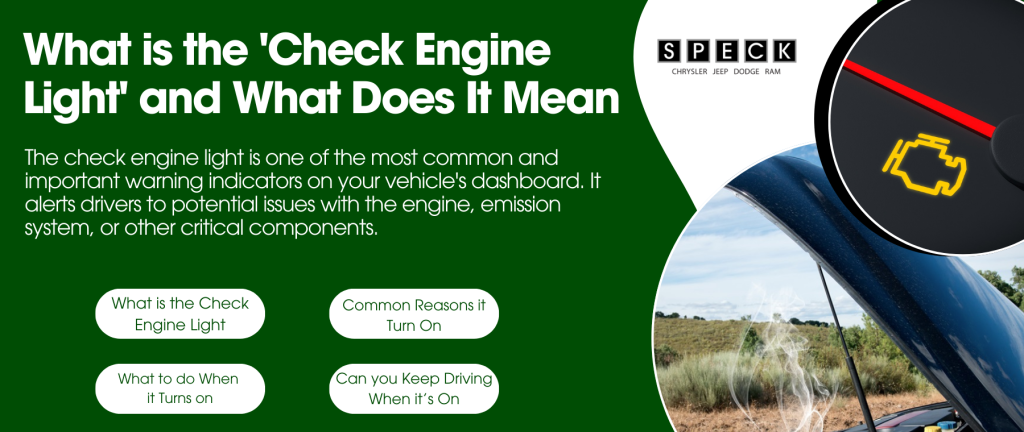
Informative image showing what the check engine light is and what it means

What is the 'Check Engine Light' and What Does It Mean

The check engine light (CEL) is one of the most common and important warning indicators on your vehicle's dashboard. It alerts drivers to potential issues with the engine, emission system, or other critical components. Understanding what this light means and how to respond can help prevent costly repairs and ensure your vehicle runs smoothly. 1. What is the Check Engine Light? The CEL, also known as te malfunction indicator lamp (MIL), is part of your vehicle's onboard diagnostic system (OBD-II). When a problem is detected, the light illuminates to notify the driver that something requires attention. 2. Common Reasons the Check Engine Light Turns On Several issues can trigger the CEL, ranging from minor to severe problems: Loose or Faulty Gas Cap: A loose, cracked, or missing gas cap can cause the light to turn on due to fuel vapor escaping. Oxygen Sensor Failure: A malfunctioning oxygen sensor affects fuel efficiency and emission. Catalytic Converter Issues: If the catalytic converter is failing, it can reduce performance and increase emissions. Mass Airflow Sensor (MAF Problems): This sensor controls how much air enters the engine, issues can cause rough idling and poor fuel economy. Spark Plug or Ignition Coil Failure: Faulty spark plugs can lead to engine misfires, decreased performance, and higher fuel consumption. Battery or Alternator Issues: Electric system problems can sometimes trigger the CEL. 3. What to Do When the Check Engine Light Comes On If your CEL turns on, follow these steps: Check Your Gas Cap: Tighten it and see if the light turns off after a few drives. Observe Vehicle Performance: If the car runs normally, the issue may not be urgent, but you should still have it checked. Look for Flashing Light: A flashing check engine light indicates a severe issue, like an engine misfire, and requires immediate attention. Use an OBD-II Scanner: Many auto parts stores offer free diagnostics to determine the trouble code causing the issue. Schedule a Professional Inspection: If the light stays on, take your vehicle to a certified mechanic for a thorough diagnosis. 4. Can You Keep Driving with the Check Engine Light On? If the Light is Steady: You can usually continue driving but should schedule a service appointment soon. If the Light is Flashing: Stop driving immediately to prevent further damage and have the vehicle inspected as soon as possible. Schedule Your Service Appointment in Sunnyside The CEL is your vehicle's way of telling you something needs attention. While some issues are minor, others can lead to significant repairs if ignored. If your engine light comes on, take the time to diagnose the problem or seek professional help to keep your car running safely and efficiently. Schedule Service Appointment The information provided is for general informational purposes only and does not constitute legal, financial, or professional advice. While we strive to provide accurate and up-to-date information, we make no guarantees regarding the completeness, accuracy, or reliability of the information presented. Any action you take based on the context of this blog is strictly at your own risk. Always consult a qualified professional or specialist for advice specific to your situation. We are not responsible for any losses or damages arising from the use of this blog or its content.
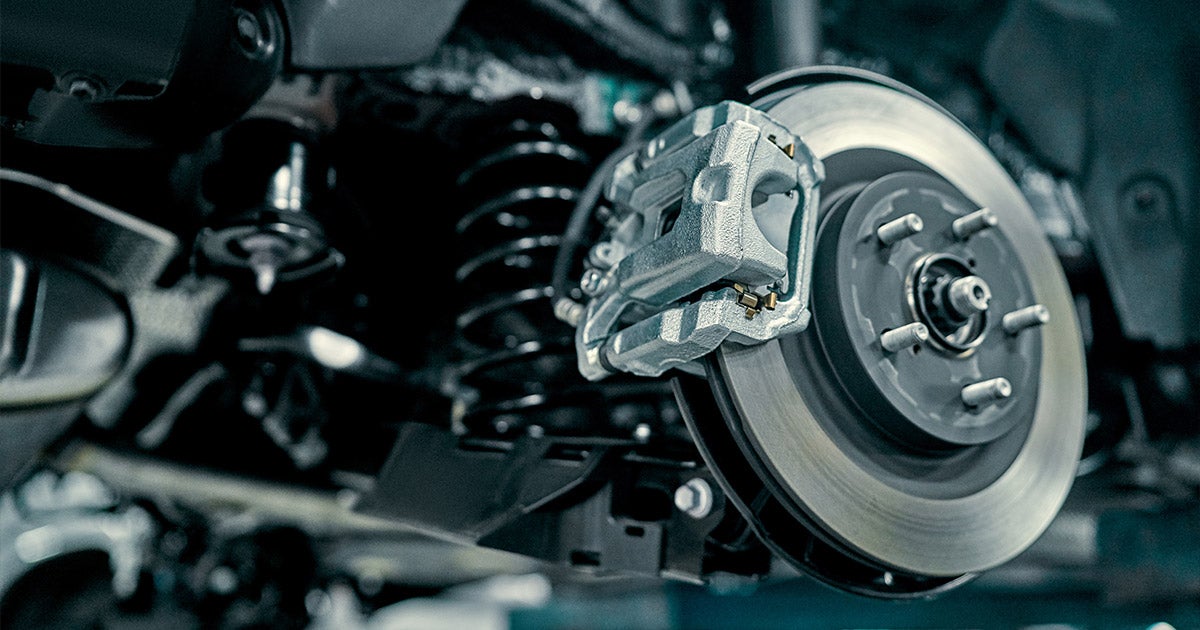
Vehicle Brakes

Why Is My Vehicle Vibrating When I Press on My Brakes

Experiencing vibrations when you press on your brakes can be unsettling and a sign of potential issues with your vehicle’s braking system. Identifying the cause early can help prevent more significant problems and ensure your safety on the road. Here are some common reasons why your vehicle may be vibrating when you brake and what you can do about it. Warped Brake Rotors Brake rotors can become warped over time due to excessive heat and wear. When this happens, the brake pads cannot make smooth contact with your rotor surface, causing vibrations when braking. You might notice the shaking is more pronounced when slowing down from high speeds. Resurfacing or replacing the rotors can help resolve this issue. Worn or Uneven Brake Pads Brake pads wear down over time, and if they become uneven, they may cause vibrations when pressed against the rotors. Using low-quality brake pads or not replacing them regularly can also contribute to the problem. Inspecting and replacing brake pads when they show signs of wear can help maintain smooth braking performance. Stuck Brake Calipers Brake calipers apply pressure to the brake pads, allowing them to grip the rotors and slow down your vehicle. If a caliper becomes stuck or fails to release properly, it can cause uneven braking and vibrations. Yu may also notice a burning smell or a pulling sensation when braking. Addressing caliper issues promptly can prevent further damage to the braking system. Suspension or Steering Problems Sometimes, the issue isn’t directly related to the brakes. Worn suspension components, such as control arms or bushings, can create instability that manifest as vibrations when braking. Similarly, steering system issues, such as worn tie rods or ball joints, can contribute to the problem. A thorough inspection of these components can help diagnose and fix the issue. Wheel Alignment and Tire Issues Misaligned wheels or unbalanced tires can also cause vibrations, especially when braking. If you notice uneven tire wear or your vehicle pulling to one side, it may be time to check your wheel alignment and balance. Keeping your tires properly inflated and rotated can also help prevent vibrations. What to Do Next If you experience vibrations when braking, it’s essential to address the issue as soon as possible. Here’s what you can do: Schedule a brake inspection with a certified mechanic. Check for uneven brake pad wear and replace them if necessary. Have your brake rotors inspected and resurfaced or replaced if needed. Ensure your wheel alignment and tire balance are correct. Inspect suspension and steering components for any signs of wear or damage. Diagnose Car Brake Issues Vibrations when braking can be cause by various factors, from warped rotors to suspension issues. Identifying the root cause early can help maintain your vehicle’s performance and ensure a safe driving experience. If you’re unsure about the cause, let a certified technician inspect diagnose your brake troubles. Schedule Service Service Specials Car Brakes Info The information provided is for general informational purposes only and does not constitute legal, financial, or professional advice. While we strive to provide accurate and up-to-date information, we make no guarantees regarding the completeness, accuracy, or reliability of the information presented. Any action you take based on the context of this blog is strictly at your own risk. Always consult a qualified professional or specialist for advice specific to your situation. We are not responsible for any losses or damages arising from the use of this blog or its content.
Vehicle Maintenance

Can Regular Vehicle Maintenance Extend the Life of Your Vehicle?

Regular vehicle maintenance is crucial for keeping your car running efficiently and ensuring its longevity. By staying on top of routine service, you can prevent costly repairs and keep your vehicle in top condition for years to come. Here are the key ways regular maintenance can extend the life of your car. 1. Engine Health & Performance Routine oil changes keep the engine lubricated and prevent premature wear. Replacing air filters ensure proper airflow and fuel efficiency. Checking and replacing spark plugs as needed keeps the engine running smoothly. 2. Tire Care & Longevity Regular tire rotations promote even tread wear, extending tire life. Proper inflation improves fuel efficiency and handling. Alignments prevent uneven wear and enhanced overall vehicle stability. 3. Brake System Maintenance Replacing brake pads before they wear down prevents damage to rotors. Checking brake fluid ensures proper braking performance. Addressing unusual noises or vibrations prevents costly repairs. 4. Fluid Checks & Replacements Transmission fluid, coolant, and power steering fluid should be checked and changed periodically. Keeping fluids at proper levels prevents overheating and component failure. Regular flushes remove contaminants that can cause wear. 5. Battery & Electrical System Care Cleaning battery terminals prevents corrosion and ensures a strong start. Testing the battery regularly avoids unexpected failures. Checking the alternator and starter helps prevent electrical issues. 6. Preventing Rust & Corrosion Washing and waxing your car regularly protects the paint and body from rust. Keeping the undercarriage clean prevents salt buildup from causing corrosion. Addressing small paint chips early prevents further damage. Regular Car Maintenance Pays Off By committing to regular vehicle maintenance, you can avoid costly breakdowns, improve safety, and maximize your car’s lifespan. A well-maintained vehicle not only runs better but also retains its value over time. Whether it’s oil changes, tire care, or fluid checks, routine service is a small investment that pays off in the long run. Service Specials Oil Change Info Wiper Blades The information provided is for general informational purposes only and does not constitute legal, financial, or professional advice. While we strive to provide accurate and up-to-date information, we make no guarantees regarding the completeness, accuracy, or reliability of the information presented. Any action you take based on the context of this blog is strictly at your own risk. Always consult a qualified professional or specialist for advice specific to your situation. We are not responsible for any losses or damages arising from the use of this blog or its content.
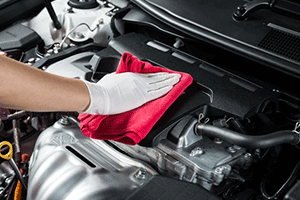
How To Clean Your Engine

Cleaning car engine. We all love having a clean car, but the engine is not something we typically clean during normal car washes. Engine cleaning takes time and special care in order to do the job properly without damaging any components. In preparation, always make sure that the weather is on your side while the engine dries after cleaning. Just like oil inspections, the vehicle’s engine needs to be cooled off because working with a hot engine is dangerous and can lead to injury. It’s also important to have a good cleaner/engine degreaser that will get the job done. Brands such as Chevron, Restore, Griot’s, Simple Green (natural degreaser) and more all make these products. Be sure to follow the directions on the bottle carefully. Start by covering all electrical parts, electronics and wires with plastic to avoid getting these components wet. You can also remove the battery or battery cables, removing the negative cable first to avoid a short in the circuit. Use a brush to wipe any debris or dirt throughout your engine. Spray the engine with degreaser thoroughly and with caution to the electrical parts, and scrub it in with a stiff, synthetic-bristle brush to remove any caked on engine grease. Let it soak for at least 5 minutes. Rinse your engine with a regular, low pressure hose. If you have a nozzle available, set it on a small stream setting. You want to take all precautions to avoid the electrical components! Be sure to also rinse the exterior of your vehicle in case any degreasing product made its way on your paint. Dry your engine with an absorbent shop towel or compressed air for all those small areas. Take the plastic off and make sure no electrical components are dry. You can then replace the battery or negative cable. Let your engine area air dry the rest of the way before running your vehicle. Time for a detail? Schedule your detail appointment easily online. Schedule Service Service Specials The information provided is for general informational purposes only and does not constitute legal, financial, or professional advice. While we strive to provide accurate and up-to-date information, we make no guarantees regarding the completeness, accuracy, or reliability of the information presented. Any action you take based on the context of this blog is strictly at your own risk. Always consult a qualified professional or specialist for advice specific to your situation. We are not responsible for any losses or damages arising from the use of this blog or its content.

Summer Car Care Tips

Make sure your coolant system is working properly. The cooling system keeps your engine from overheating, which can be an occurrence more likely to happen in the heat of the Summer season. Check hoses for any leaks or cracks, and ensure your coolant is clean and topped off. If your vehicle may need it, a coolant flush is a good idea to schedule. Keep your fluids up. The fluids inside your vehicle are key to keep everything working in proper order. Fluids work hard to keep your engine systems cool in the extreme heat. Your fluids include brake fluid, power steering fluid, coolant, transmission fluid, and the most regularly checked — motor oil. Oil should be changed regularly in order for a smooth-running engine. Inspect your brakes. When braking, especially from high speeds, the friction produces a lot of heat. The extra heat from the Summer can create even more wear on your brakes. It is a good idea to get your brakes inspected to ensure that your brakes are ready to handle the Summer roads. Check your tire pressure regularly. Whether it is drastic heat or drastic cold, the outside temperature can have an effect on your tire pressure. Heat can cause your tire pressure to increase, and a sudden drop of temperature can do just the opposite to your tires. It’s a good idea to give a good glance over your tires before you head out on your way, and be sure to get a professional inspection regularly to make sure your tires are healthy. Schedule your summer car care maintenance online or call 509-402-2588 today. Schedule Service The information provided is for general informational purposes only and does not constitute legal, financial, or professional advice. While we strive to provide accurate and up-to-date information, we make no guarantees regarding the completeness, accuracy, or reliability of the information presented. Any action you take based on the context of this blog is strictly at your own risk. Always consult a qualified professional or specialist for advice specific to your situation. We are not responsible for any losses or damages arising from the use of this blog or its content.

Contact Us

Fill out this form below and we'll contact you shortly
*Required Fields