



If you’ve ever been told your vehicle needs a fuel system cleaning and wondered whether it’s really necessary — you’re not alone. Here’s a straightforward explanation of what it is, why it matters, and how it benefits your Jeep, Ram, or any other vehicle you drive.
What Is a Fuel System Cleaning?
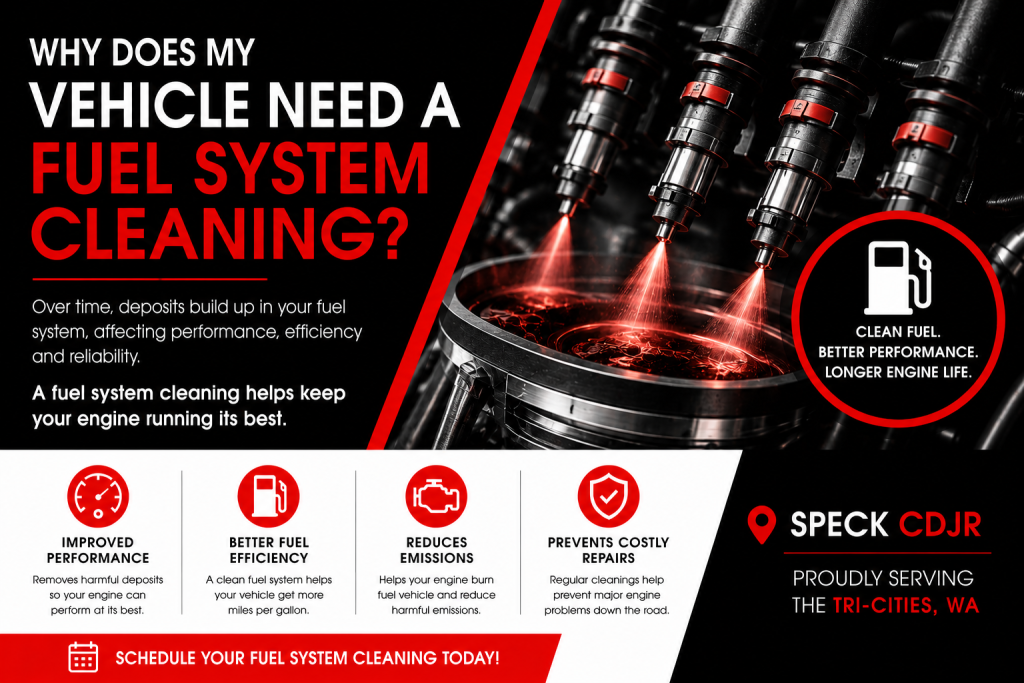
A fuel system cleaning removes built-up carbon deposits, varnish, and contaminants from the key components of your fuel delivery system. Over time these deposits build up inside your fuel injectors, throttle body, intake valves, and combustion chamber — quietly robbing your engine of performance and efficiency.
A thorough fuel system cleaning covers:
- Fuel Injectors: Restores proper fuel spray patterns
- Throttle Body: Removes carbon buildup that restricts airflow
- Intake Valves & Ports: Clears deposits that disrupt the air-fuel mixture
- Combustion Chamber: Removes buildup that causes knocking and misfires
Why Does My Vehicle Need One?
Every time your engine runs, small amounts of carbon and varnish are left behind by the combustion process. Over time these deposits accumulate and start affecting how your vehicle drives. Here’s what happens:
Reduced Fuel Economy
Clogged injectors deliver uneven fuel spray — meaning your engine burns more fuel to produce the same power. A clean fuel system restores proper delivery and can improve your miles per gallon.
Loss of Power & Acceleration
Deposits on intake valves restrict airflow and disrupt the air-fuel mixture. The result is sluggish acceleration and hesitation — especially noticeable when merging on the highway or towing.
Rough Idle & Engine Misfires
Partially clogged injectors cause inconsistent fuel delivery — leading to a rough idle, engine misfires, and sometimes a check engine light.
Hard Starting
Deposits in the fuel system can make your engine harder to start — especially in cold Eastern Washington winters or after the vehicle has sat for an extended period.
Signs It’s Time for a Fuel System Cleaning
Watch for these warning signs:
- 📉 Noticeable drop in fuel economy
- 🐢 Sluggish or hesitant acceleration
- 💨 Rough idle or engine misfires
- 🔑 Hard starting — especially in cold weather
- ⚠️ Check engine light related to fuel or misfires
Most service professionals recommend a fuel system cleaning every 30,000 to 60,000 miles. Local driving conditions — short trips, heavy towing, and older vehicles — can accelerate deposit buildup here in the Yakima Valley and Tri-Cities area.
Jeep Service & Ram Service — We Know Your Vehicle
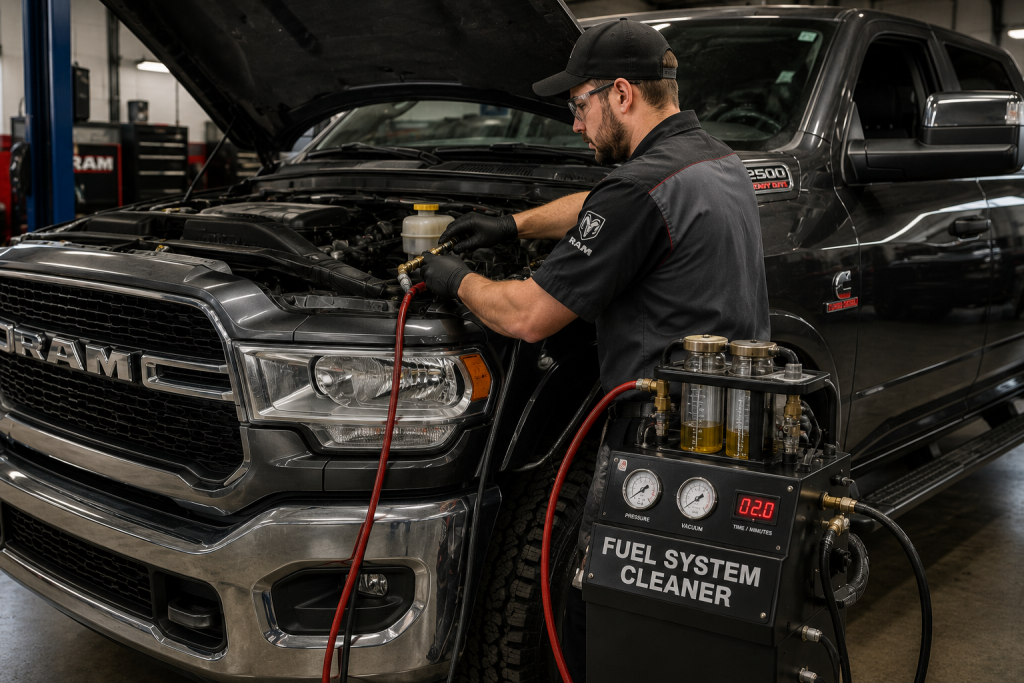
Whether you drive a Jeep Wrangler, Grand Cherokee, or Gladiator — or a Ram 1500, 2500, or 3500 — our factory-trained technicians know your vehicle’s fuel system inside and out. We use professional-grade cleaning equipment and manufacturer-approved agents — not off-the-shelf additives you pour into the gas tank.
Check Our Service Specials
Before your next visit, check our current service specials online. We regularly feature fuel system cleaning as part of broader maintenance packages — making it easier and more affordable to stay on top of this important service. Combining it with your oil change or multi-point inspection is a smart, cost-effective approach.
Schedule Your Service at Speck CDJR
Our service team at Speck CDJR in Sunnyside is ready to help — whether it’s a standalone fuel system cleaning, part of a service special, or combined with your next Jeep service or Ram service appointment. Schedule online or stop by today.
The information provided is for general informational purposes only and does not constitute legal, financial, or professional advice. While we strive to provide accurate and up-to-date information, we make no guarantees regarding the completeness, accuracy, or reliability of the information presented. Any action you take based on the context of this blog is strictly at your own risk. Always consult a qualified professional or specialist for advice specific to your situation. We are not responsible for any losses or damages arising from the use of this blog or its content.
Connect with us
