



Most drivers know they need to change their engine oil regularly. However, many overlook one of the most important filters in their vehicle. The cabin air filter is one of the most commonly missed maintenance items on any vehicle today. Here is everything you need to know about your cabin air filter and when to replace your air filter at Speck CDJR in Sunnyside. What Is a Cabin Air Filter? A cabin air filter is a small but important filter located inside your vehicle's HVAC system. It filters the air that comes into your passenger compartment through the heating and cooling system. Every time you turn on your heat, air conditioning, or ventilation fan, air passes through the cabin air filter before reaching you and your passengers. It is designed to capture dust, pollen, dirt, mold spores, and other airborne contaminants. A clean cabin air filter means cleaner and healthier air inside your vehicle every single day. How Often Should You Replace Your Cabin Air Filter? Most manufacturers recommend replacing your cabin air filter every 15,000 to 25,000 miles. However, driving conditions in Eastern Washington can shorten that interval significantly. Here is why Yakima Valley and Tri-Cities drivers may need to replace their air filter more frequently than the standard recommendation: Dusty Road Conditions Eastern Washington is known for its agricultural environment and dusty road conditions. Driving on dirt roads, gravel paths, or through agricultural areas significantly accelerates cabin air filter clogging. If you regularly drive on unpaved roads around Sunnyside, Prosser, or the Yakima Valley, you may need to replace your cabin air filter closer to every 12,000 miles. Seasonal Pollen The Yakima Valley and surrounding agricultural region produces significant amounts of pollen during spring and summer. High pollen levels can clog your cabin air filter faster than normal. If you suffer from allergies, a fresh cabin air filter can make a meaningful difference in the air quality inside your vehicle. Wildfire Smoke Eastern Washington residents are no strangers to wildfire smoke during summer months. Wildfire smoke particles are extremely fine and can penetrate and clog your cabin air filter very quickly. During heavy smoke events, your cabin air filter may need to be replaced more frequently than normal to maintain good air quality inside your vehicle. Signs Your Cabin Air Filter Needs Replacing Do not wait until your next scheduled service to check your cabin air filter. Watch for these common warning signs that it is time to replace your air filter: Reduced airflow from your vents even on the highest fan setting Musty or unpleasant odors coming from your vents when the heat or A/C is on Increased dust accumulation on your dashboard and interior surfaces Allergy symptoms worsening while driving despite windows being closed Whistling or unusual noises coming from your HVAC system when the fan is running Visible dirt, debris, or discoloration on the filter itself If you notice any of these warning signs, it is time to bring your vehicle to C Speck Motors for a cabin air filter inspection and replacement. Cabin Air Filter vs. Engine Air Filter These are two completely different filters and both matter for your vehicle's health. The cabin air filter cleans the air coming into your passenger compartment. The engine air filter cleans the air going into your engine for combustion. Both should be inspected regularly and both are quick and affordable replacements when the time comes. Our service team at C Speck Motors can inspect and replace your air filter for both during the same service visit. What Happens If You Don't Replace Your Cabin Air Filter? Ignoring your cabin air filter can lead to several problems over time. A severely clogged filter restricts airflow through your HVAC system. That forces your blower motor to work harder and can lead to premature blower motor failure. A clogged filter also allows contaminants to bypass the filter and circulate inside your cabin. That can worsen air quality and aggravate allergies and respiratory conditions. Regular cabin air filter replacement is one of the simplest and most affordable ways to protect your health and your HVAC system. How to Check Your Cabin Air Filter Not sure when your cabin air filter was last replaced? Here are a few ways to check: Check your owner's manual for the recommended replacement interval for your specific vehicle Ask our service team at C Speck Motors to inspect your filter during your next oil change visit Look for visible signs of dirt, dust, or debris on the filter if you can access it yourself If in doubt, our service team is always happy to check your cabin air filter and give you an honest recommendation. Schedule Your Cabin Air Filter Replacement at Speck CDJR Ready to replace your air filter in Sunnyside, WA? Scheduling your cabin air filter replacement at C Speck Motors is fast and easy. Here is how to book your appointment: Online: Visit our website and click "Schedule Service" By Phone: Call our service department directly Walk-In: Stop by during service hours for same-day availability A cabin air filter replacement is one of the quickest and most affordable service items available. Our service team at Speck CDJR will have you in and out in no time. Do not overlook this simple but important maintenance item. Schedule your cabin air filter replacement at Speck CDJR in Sunnyside today and breathe easier every time you get behind the wheel.
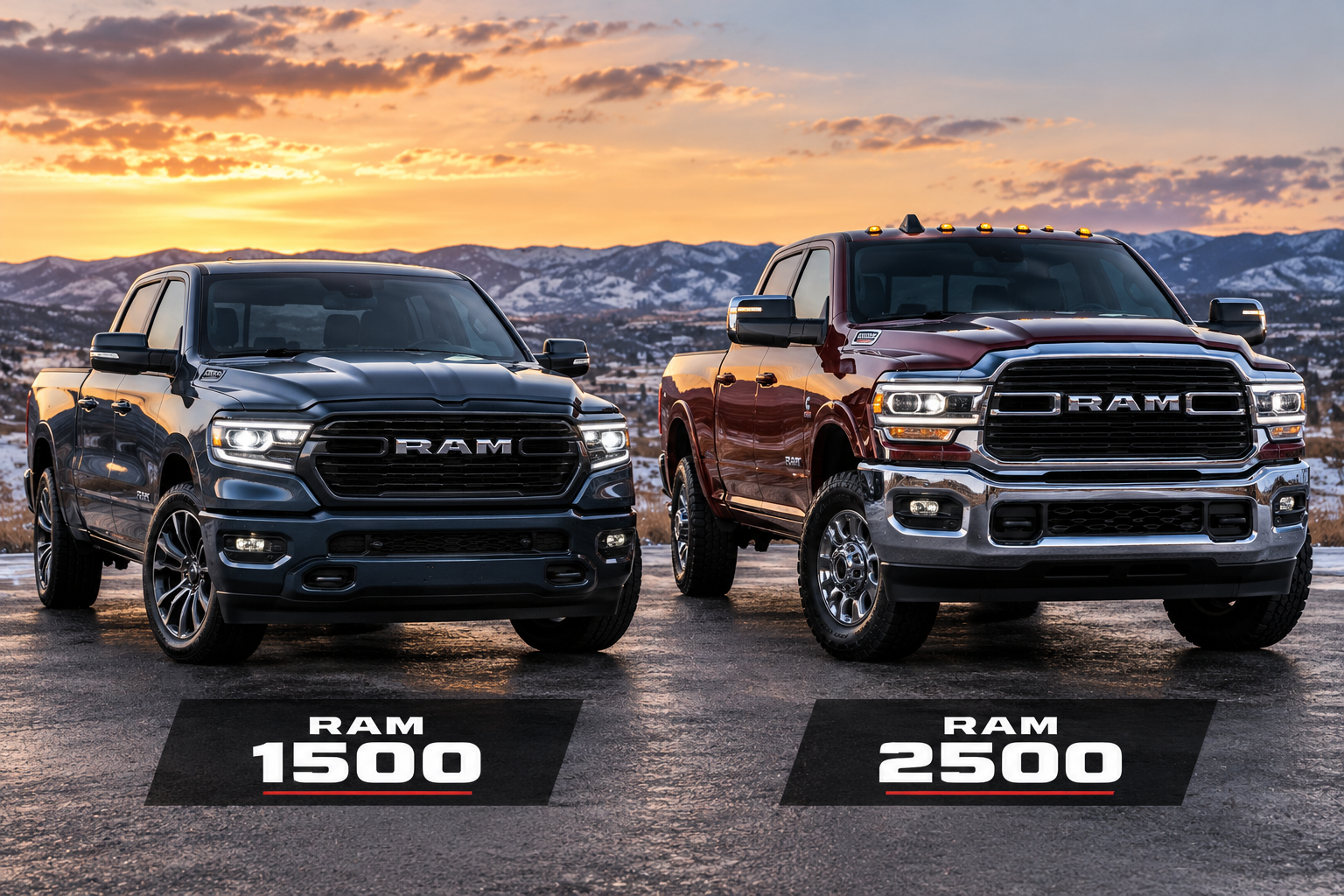
Ram 1500 vs Ram 2500: Which Truck Do You Actually Need?
If you are shopping for a new Ram truck at Speck CDJR in Sunnyside, one of the most important decisions you will face is choosing between the Ram 1500 and the Ram 2500. Both are exceptional trucks but they are built for very different buyers and very different workloads. Here is your complete Ram 1500 vs Ram 2500 comparison guide from our team at Speck CDJR. Ram 1500 vs Ram 2500: At a Glance Feature Ram 1500 Ram 2500 Starting MSRP From $38,585 From $43,840 Standard Engine 3.6L V6 6.4L Hemi V8 Available Engines 5.7L Hemi / Hurricane I6 / EcoDiesel 6.4L Hemi V8 / 6.7L Cummins Diesel Max Towing Up to 12,750 lbs Up to 23,370 lbs Max Payload Up to 2,300 lbs Up to 4,010 lbs Rear Suspension Coil Spring Leaf Spring Air Suspension Available Not Available Best For Daily Driving and Moderate Towing Heavy-Duty Work and Maximum Towing All specs based on current available model year information. Contact Speck CDJR for exact pricing. The Ram 1500: The Versatile Everyday Truck Starting From $38,585 MSRP The Ram 1500 delivers an exceptional combination of capability, comfort, fuel efficiency, and everyday drivability. It is the right choice for the vast majority of Sunnyside and Yakima Valley truck buyers who need a capable and comfortable everyday work and family truck. Ram 1500 Highlights: Available coil spring rear suspension delivers the smoothest ride of any half-ton truck Available air suspension provides adjustable ride height and load leveling capability Available 3.0L Hurricane twin-turbo I6 delivers impressive power and efficiency Available 3.0L EcoDiesel V6 for maximum fuel efficiency on long Eastern Washington drives Available multifunction tailgate with nine different configurations for versatile cargo access More fuel-efficient and easier to maneuver than the Ram 2500 in everyday situations Who Is the Ram 1500 Best For? The Ram 1500 is ideal for Sunnyside and Yakima Valley buyers who use their truck for daily commuting, weekend recreation, and moderate towing and hauling needs. It handles most recreational towing tasks including boats, campers, and trailers up to 12,750 lbs across Eastern Washington. The Ram 2500: The Heavy-Duty Workhorse Starting From $43,840 MSRP The Ram 2500 is a purpose-built heavy-duty truck designed for buyers who regularly push the limits of what a half-ton truck can handle. It is the right choice for serious Yakima Valley farmers, ranchers, contractors, and commercial operators who demand maximum capability every single working day. Ram 2500 Highlights: Available 6.7L Cummins High Output diesel delivers up to 1,075 lb-ft of torque Maximum towing capacity of up to 23,370 lbs when properly equipped with the Cummins diesel Maximum payload capacity of up to 4,010 lbs for serious bed hauling applications Significantly stronger frame and suspension designed for sustained heavy-duty use Available Aisin heavy-duty automatic transmission paired with the Cummins diesel engine Who Is the Ram 2500 Best For? The Ram 2500 is ideal for Sunnyside and Yakima Valley buyers who regularly tow horse trailers, equipment trailers, fifth-wheel campers, and commercial loads that exceed the Ram 1500's limits. It is the right choice for farmers, ranchers, and contractors in Benton County and the Yakima Valley who need maximum reliability every day. Key Differences: Ram 1500 vs Ram 2500 Ride Quality The Ram 1500's available coil spring rear suspension delivers a significantly smoother and more refined ride than the Ram 2500's leaf spring rear suspension. Most drivers immediately notice the ride quality difference between the two trucks during a back-to-back test drive at Speck CDJR. Fuel Economy The Ram 1500 delivers significantly better fuel economy than the Ram 2500 across every available powertrain. The available EcoDiesel delivers up to 33 MPG highway making it an excellent choice for high-mileage Yakima Valley drivers. Maneuverability The Ram 1500 is shorter, lighter, and significantly easier to maneuver in busy Sunnyside and Tri-Cities commercial areas than the Ram 2500. Operating Costs The Ram 2500's larger engine options result in higher fuel consumption and potentially more expensive maintenance costs over the life of the truck. Buyers who do not regularly need the Ram 2500's additional capability pay a premium for capability they never actually use. The Most Important Question to Ask Yourself Before deciding between the Ram 1500 and Ram 2500 ask yourself one honest question. What is the heaviest load I regularly tow or carry in real life throughout the year? If your honest answer is consistently above 12,000 lbs of towing or 2,000 lbs of payload, the Ram 2500 is the right truck for your needs. If your honest answer is below those thresholds most of the time, the Ram 1500 is almost certainly the better overall choice for your budget and everyday comfort. Ram 1500 vs Ram 2500: Which Should You Choose? Choose the Ram 1500 if you: Use your truck primarily for daily commuting and family transportation Tow recreationally with loads consistently under 12,000 lbs throughout the year Want the smoothest and most comfortable everyday ride quality in a Ram truck Prioritize fuel economy and lower operating costs over maximum heavy-duty capability Regularly park and maneuver in busy Sunnyside and Tri-Cities commercial areas Choose the Ram 2500 if you: Regularly tow loads exceeding 12,000 lbs including fifth-wheels, equipment, and livestock Farm or ranch in the Yakima Valley and need maximum daily payload and towing reliability Need the available Cummins diesel for maximum torque and long-haul fuel efficiency Work in a commercial or contractor capacity that demands heavy-duty capability every day Regularly tow gooseneck or fifth-wheel trailers that exceed the Ram 1500's towing limits Come Test Drive Both at Speck CDJR The best way to decide between the Ram 1500 and Ram 2500 is to experience both firsthand at Speck CDJR in Sunnyside. Our team is ready to set up back-to-back test drives so you can feel the real difference between a half-ton and heavy-duty Ram truck on Sunnyside and Yakima Valley roads. Here is how to schedule your test drives today: Online: Browse our current Ram 1500 and Ram 2500 inventory on our website By Phone: Call our sales team directly to arrange your back-to-back test drives Walk-In: Stop by during business hours and our team will have both models ready We serve Sunnyside, Prosser, Grandview, Kennewick, Richland, Pasco, and the entire Yakima Valley. Come see us at Speck CDJR today and find out which Ram truck is the perfect fit for your Eastern Washington lifestyle and work needs. Compare Ram Models